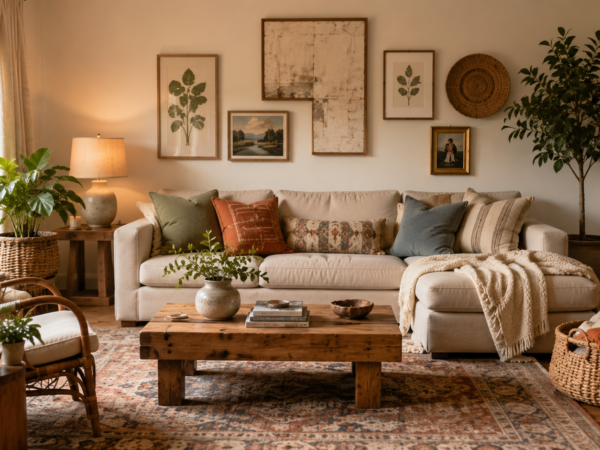
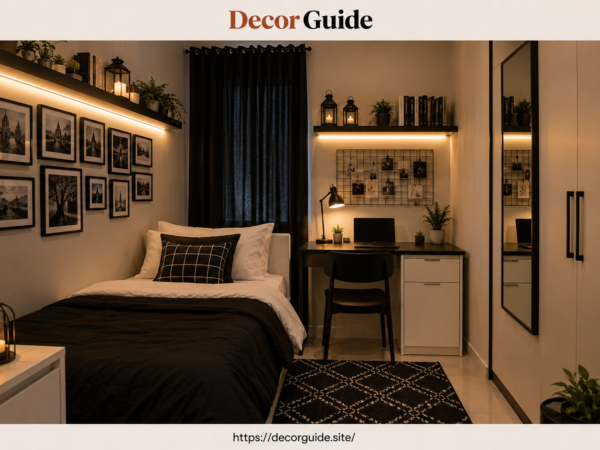
A living room storage handles a lot. It holds the TV, the toys, the throw blankets, the chargers, and the day’s mail, often all at once. Without a plan, everything lands on the sofa and the coffee table. Good living room storage gives each group of items a place that fits your space, your budget, and your daily routine. This guide walks through 11 practical options, from a modern storage cabinet for the living room to hidden space inside furniture you already need. Each idea includes sizes, materials, and safety notes.
Sort What You Need to Store First
Before you buy anything, sort your belongings into groups: media and cables, books, blankets and cushions, kids’ items, games, and paperwork. Storage works best when it matches what you actually own, not what looks good in a showroom.
Next, measure. Note the wall length, ceiling height, window positions, and door swings. Leave a walkway of 30 to 36 inches (75 to 90 cm) along the main paths. If you want to see how furniture placement affects movement and comfort, feng shui house plan designs explain layout principles in more detail.
Tip: Decide how much needs closed storage and how much can stay on display. Closed doors hide visual noise, while open shelves suit the things you like to see.
Start With a Living Room Storage Cabinet
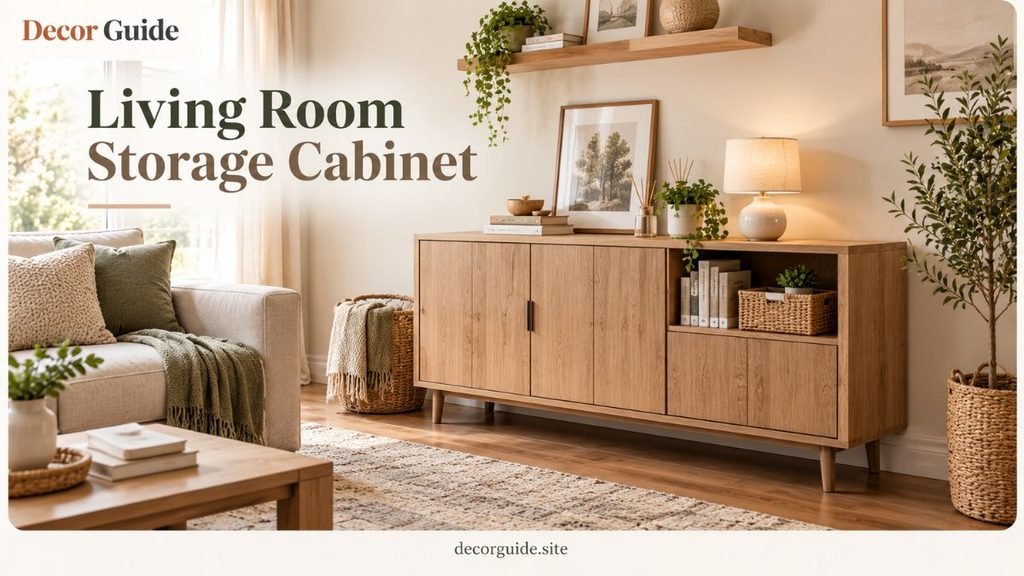
A cabinet is the most direct answer to clutter because the doors hide everything inside. A living room storage cabinet can hold board games, photo albums, spare cables, and seasonal decor in a footprint of about 24 to 36 inches (60 to 90 cm) wide.
Choose the height based on the room. A low cabinet of 30 to 36 inches (75 to 90 cm) can sit under a window or double as a display surface. A tall cabinet of 60 to 72 inches (150 to 180 cm) holds more but needs clear wall space.
Check the inside before you buy. Adjustable shelves let you change the layout later, and a mix of shelves and drawers handles both tall items and small ones.
Safety: Anchor any cabinet taller than 30 inches (75 cm) to a wall stud with an anti tip strap, especially in homes with children.
Choose a Modern Storage Cabinet for the Living Room
A modern storage cabinet for the living room usually has flat doors, slim handles or push to open fronts, and a clean base. These details keep the look calm, which helps when the room is small or already busy.
Material affects both looks and lifespan. Solid wood and plywood hold screws well and carry weight. Painted or laminate covered MDF (medium density fiberboard) is a common budget choice, but it can swell if it gets wet, so wipe spills quickly. Metal frames with glass doors give a lighter look.
Depth is the measurement people forget. Aim for 12 to 16 inches (30 to 40 cm) for books and games, and up to 18 inches (45 cm) if you plan to use baskets.
Tip: A cabinet on legs, with about 6 inches (15 cm) of floor showing underneath, feels lighter in a small room and is easier to clean around.
Add Floating Shelves for Books and Decor
Floating shelves use wall space that would otherwise sit empty. They keep the floor clear and let you mix books, plants, and a few decor pieces without a bulky unit.
A shelf depth of 8 to 10 inches (20 to 25 cm) fits most books. Go to 12 inches (30 cm) if you want to display larger frames or baskets. Space shelves 10 to 12 inches (25 to 30 cm) apart for books, and wider for taller items.
Group items in odd numbers and leave some empty space. A shelf packed edge to edge looks like clutter, even when it is organized.
Safety: Fasten shelves into wall studs, or use anchors rated for the weight you plan to load. Keep candles away from shelves, especially near paper, fabric, or dried plants.
Use a Storage Ottoman or Bench
12. Keep Your Storage System Working Over Time
Even the best living room storage stops working if it is never reset. A short routine keeps the system useful, and it takes less time than a big clean-out every few months.
Set aside 10 minutes once a week. Return stray items to their bins, clear the coffee table, and refold the blankets in the ottoman. Small resets stop clutter from building up.
Review your storage once a season. Pull out anything you have not used in the past year, then donate or recycle it. This frees up space, so you may not need to buy another cabinet.
Try a simple one-in, one-out rule. When a new book, toy, or decor piece comes in, one item goes out. This works especially well in small apartments, where every shelf counts.
Look after the furniture too. Dust shelves with a dry or slightly damp cloth, wipe wood with a mild cleaner, and keep MDF as dry as possible.
Safety: Every few months, check wall shelves and anti-tip straps, and tighten any screws that have loosened.
Tip: Keep one empty basket near the sofa as a catch-all for items that do not have a home yet. Empty it at the end of each week.
A storage ottoman works as a footrest, an extra seat, and a hidden container in one piece. It is a good home for throw blankets, game controllers, and board games, and it does not need any wall space.
Most sofa seats sit about 17 to 18 inches (43 to 46 cm) from the floor, so an ottoman of the same height is comfortable to use. A bench against a wall or at the foot of a sofa works the same way in a narrow room.
Pick a hinged lid with a soft close or lift assist mechanism if children will use it. This prevents fingers from getting caught.
Tip: Wipeable fabric, faux leather, or tightly woven upholstery lasts longer in family homes than loose weave fabric. Choose a lid that can hold a tray for drinks.
Use Wall Hooks and Slim Racks for Everyday Items
Wall hooks and slim racks are a low-cost way to add living room storage without buying large furniture. They suit throws, bags, headphones, and light jackets that would otherwise land on the sofa.
Mount hooks about 60 to 66 inches (150 to 165 cm) from the floor for adults, and lower for children. A rail with 4 to 5 hooks fits most walls.
Safety: Check the weight limit on each hook, and use wall anchors in drywall. Keep cords and heavy bags away from walkways.
Pick a Coffee Table With Hidden Storage
A coffee table with drawers, a lift top, or a lower shelf keeps remotes, coasters, and magazines off the surface. This helps most when the room has no other flat space or built in storage.
Leave about 14 to 18 inches (35 to 45 cm) between the table and the sofa so you can reach it and still walk past. Keep the height close to the sofa seat or slightly lower. A table 16 to 18 inches (40 to 45 cm) high suits most sofas.
Rounded corners are safer in homes with toddlers, and a lift top style doubles as a laptop or dining surface.
Tip: A lower shelf with a woven basket makes a simple catch all that you can empty in under a minute. Avoid glass tops if small children play nearby.
Try Living Room Storage Ideas for Small Spaces: Go Vertical
In a small apartment, floor space is limited, but walls are not. Tall, narrow units, wall mounted shelves, and slim bookcases add capacity without taking up much width. For living room storage ideas for small spaces, vertical pieces almost always beat wide ones.
A bookcase 10 to 12 inches (25 to 30 cm) deep fits well in a corner or beside a window. Keep heavy items on the lower shelves and lighter ones higher so the unit stays stable.
Light colors and glass or mesh doors make storage feel less heavy. A unit painted the same color as the wall also blends in and takes up less visual space.
Safety: Anchor tall units to the wall, and do not place them where they block a door, a window, or an exit path.
Use a Sideboard or Console Table
A sideboard gives you drawers and cupboards at waist height, which is easy to reach. It suits a wall opposite the sofa, an entry area, or the space between the living and dining areas.
Behind a sofa, a console table 10 to 14 inches (25 to 35 cm) deep holds lamps, trays, and baskets without cutting into the walkway. If you want a more polished look, luxury living room furniture can include sideboards with soft-close doors and lined drawers.
Choose a height close to the sofa back, usually 28 to 32 inches (70 to 80 cm), so the pieces look matched.
Tip: Leave 1 to 2 inches (2.5 to 5 cm) between a console and the sofa back so the sofa can still move. Place lamps on a stable base and keep cords tucked away. Organize the TV Wall With a Media Console
The TV wall tends to gather the most cables, boxes, and remotes. A media console keeps the TV, game systems, and streaming devices in one place, with closed doors to hide the clutter.
Choose a console slightly wider than the TV so the screen looks balanced. A 55 inch TV is about 48 inches (122 cm) wide, so a console of 55 to 60 inches (140 to 150 cm) fits well. Cable holes at the back keep wires neat, and cord clips or sleeves hold them together.
Pick a unit with open backs or ventilated doors, since devices need airflow to avoid overheating.
Safety: Do not cover power strips with fabric or stack items on devices that get warm. Mount a wall TV into studs with the correct bracket, and keep cables out of children’s reach.
Make Storage Work for Kids and Families
Families need storage that children can use by themselves. Low cubbies, toy bins, and open baskets at about 24 inches (60 cm) high let kids put things away without help, which makes tidy up time faster.
Choose soft sided or lightweight bins. Fabric baskets with handles are easier for small hands than hard plastic crates, and they are quieter when dropped. Cube units with 11 to 13 inch (28 to 33 cm) openings fit most standard bins.
Use one bin per type of toy, and rotate the contents every few weeks so the room does not feel overloaded.
Safety: Keep small parts, batteries, and breakable items in higher cabinets with child safe latches. Check that bins have no sharp edges or loose parts.
Finish With Baskets, Bins, and Labels
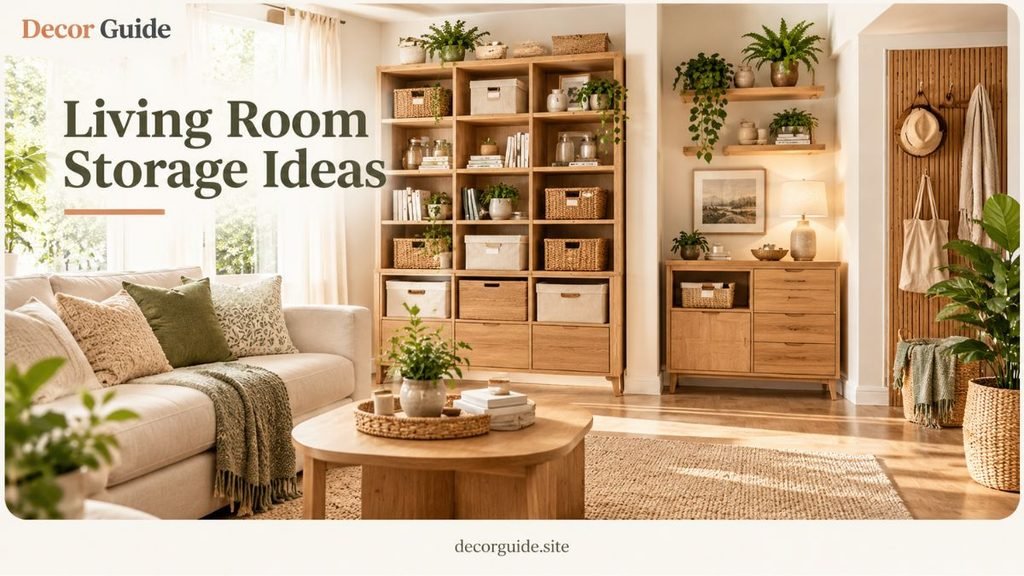
Baskets and bins turn open shelves into tidy storage. They group small items together, and they are easy to pull out and carry to another room. They also let you hide mismatched items behind one consistent look.
Natural materials like seagrass, rattan, felt, and cotton suit most decor styles. Match bin sizes to your shelf openings, with no gaps or overhangs, so the shelves look intentional. Lidded bins keep dust off papers and craft supplies.
Add small labels to the front of each bin. This helps everyone in the house know where things go, and the system lasts longer.
Tip: Keep fabric and paper bins away from candles, heaters, and fireplaces.
Quick Checklist
- Sort your items first, then choose storage to match
- Keep a 30 to 36 inch walkway through the main paths
- Use closed storage for clutter and open shelves for display
- Choose a cabinet 12 to 18 inches deep, depending on contents
- Pick solid wood or plywood for heavy loads, and keep MDF dry
- Go vertical in small rooms, with heavy items low
- Anchor tall furniture and fasten shelves into studs
- Leave airflow around TV equipment and power strips
- Give kids low, easy bins they can reach
- Label baskets so the system keeps working
Conclusion
Living room storage works best when it fits what you own and how you live. Start with one problem area, such as the TV wall or the toy pile, and fix that before adding more. A single cabinet, ottoman, or set of shelves can change how the whole room feels. Measure carefully, anchor tall pieces, and choose the option that suits your space. Pick one idea from this list and try it this week.
FAQ
How much storage does a living room need?
It depends on how many people use the room and what they keep in it. A good starting point is one closed storage piece, such as a cabinet or ottoman, plus one open shelf area for display. Add more only if clutter keeps coming back.
What is the best living room storage for a small space?
Vertical pieces and multi use furniture work best. A slim bookcase, wall shelves, a storage ottoman, and a coffee table with drawers all add capacity without using much floor space.
How do I make storage look neat and not bulky?
Choose pieces with clean lines and colors that match your walls or sofa. Raised legs, matching baskets, and an uncluttered top surface help a cabinet look lighter. Keep the tops of units mostly clear, with just two or three items on display.