A kitchen can have vintage character without looking like a museum or a themed diner. The difference usually comes down to how the older elements are chosen and combined.
A single freestanding hutch, an old fashioned light fixture, patterned curtains, vintage dishes, warm wood, or a carefully chosen color can give a modern kitchen considerably more personality. In an older kitchen, the approach can be even simpler: instead of replacing every dated feature, work with the details that already give the room its identity.
Vintage kitchen decor works best when it supports the way the kitchen is actually used. The goal is not to cover every surface with antiques. It is to create a room where useful objects, furniture, colors, and decorative details feel as though they belong together.
Current kitchen design is also showing renewed interest in nostalgic elements such as vintage work tables, wallpaper, richer cabinet colors, decorative countertop edges, and warmer palettes. The useful lesson is not to copy an entire historical kitchen, but to borrow the details that make sense for your home.
What Makes a Kitchen Feel Vintage?
There is no single definition of a vintage kitchen. The word can refer to anything from an early 20th century farmhouse kitchen to a colorful 1950 sinspired space or a warm 1970s kitchen.
Architectural and kitchen design changed considerably across those decades. Kitchens from the 1920s and 1930s often had different cabinetry, tile, and architectural details from the cheerful colors and futuristic forms associated with the 1950s and 1960s. The 1970s introduced another visual language, including warmer earth tones and more relaxed decorative elements.
That is why a convincing vintage kitchen usually has a clear visual direction.
Instead of combining a farmhouse sink, 1950s diner signs, Victorian furniture, midcentury lighting, and 1970s orange cabinets all at once, choose a dominant mood and let a few supporting pieces reinforce it.
A vintage kitchen generally benefits from:
- Warm or character rich colors
- Furniture with visible craftsmanship or age
- Traditional cabinet profiles
- Simple metal hardware
- Vintage or vintage inspired lighting
- Natural wood
- Patterned textiles
- Old fashioned kitchenware
- A small number of meaningful decorative pieces
- Open display areas balanced with practical closed storage
The most important part is balance. Vintage character becomes more convincing when there is enough empty space around it.
Start by Choosing the Vintage Era or Mood
Before buying anything, decide what kind of vintage kitchen you actually want.
A 1930s–1940s inspired kitchen can lean toward painted cabinetry, simple patterned wallpaper, traditional tile, built in eating areas, classic lighting, and old fashioned appliances.
A 1950s inspired kitchen can be more playful, using pastel colors, checkerboard patterns, diner style seating, retro appliances, chrome like details, and graphic accessories.
A midcentury kitchen can take a quieter approach with warm wood, clean lines, simple furniture, geometric details, and carefully selected vintage lighting. Designers today often recommend reinterpreting midcentury elements rather than attempting to recreate an exact period time capsule.
A 1970s inspired kitchen can work with warmer wood, earthy colors, textured materials, and collected accessories without reproducing every recognizable trend from the decade.
If you prefer something less specific, use the broader idea of an old fashioned, collected kitchen. This gives you more freedom to combine pieces from different periods.
Vintage Kitchen Decor Ideas That Work in Real Homes
Use a Vintage Inspired Color Palette
Color can establish the mood before you add a single decorative object.
For a softer vintage kitchen, consider combinations such as:
- Cream and muted green
- Butter yellow and warm white
- Dusty blue and natural wood
- Soft pink and cream
- Olive green and beige
- Deep green and warm white
- Terracotta and aged wood
- Muted red with cream accents
Pastel cabinetry, cheerful colors, and retro palettes have long been associated with vintage kitchen styling, while current interiors are also bringing warmer greens, burgundies, blues, and creamy tones back into kitchens.
You do not need to repaint the entire kitchen. A wall, island, cabinet interior, small piece of furniture, or collection of dishes can provide enough color.
Let Cabinet Details Carry the Style
Cabinetry occupies a large amount of visual space, so it can do much of the stylistic work.
If you already have older cabinets, look closely before replacing them. Interesting door profiles, inset construction, exposed hinges, natural wood, or signs of age may be worth keeping.
For a new kitchen, period inspired details can include framed cabinet fronts, simple knobs, furniture like proportions, or visible hardware.
The goal is not to make every cabinet elaborate. Too much decorative detailing can quickly make the room feel costume like.
In older homes, preserving existing architectural details can also create a stronger result than replacing everything with contemporary finishes. Recent kitchen renovations featured by This Old House repeatedly show designers retaining original character while improving storage, surfaces, lighting, and workflow.
Add Vintage Hardware
Hardware is one of the easiest ways to introduce vintage character without remodeling the kitchen.
Look for knobs and pulls with simple, traditional shapes. Aged looking metal, brass tones, ceramic knobs, or dark finishes can work depending on the era you have chosen.
Keep the hardware consistent enough to make the kitchen feel intentional. You do not need every piece to match perfectly, but unrelated styles competing across one small room can make the design look accidental.
Bring in a Freestanding Hutch or Cabinet
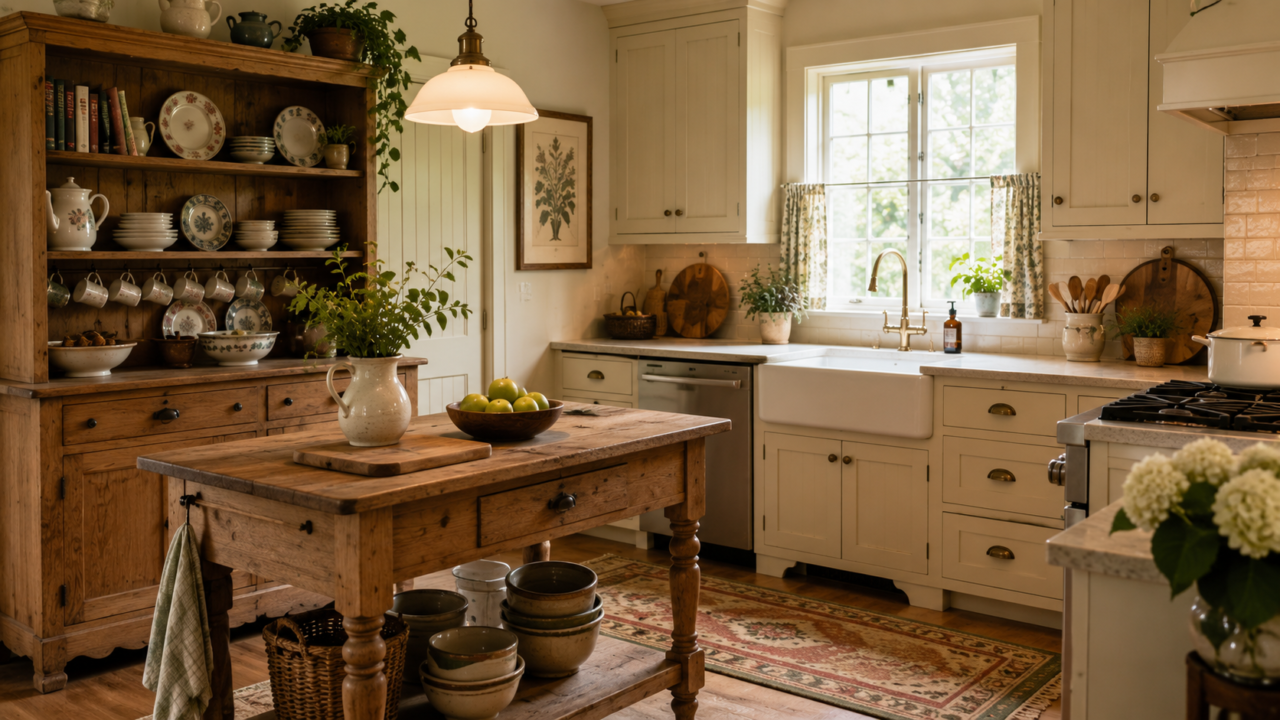
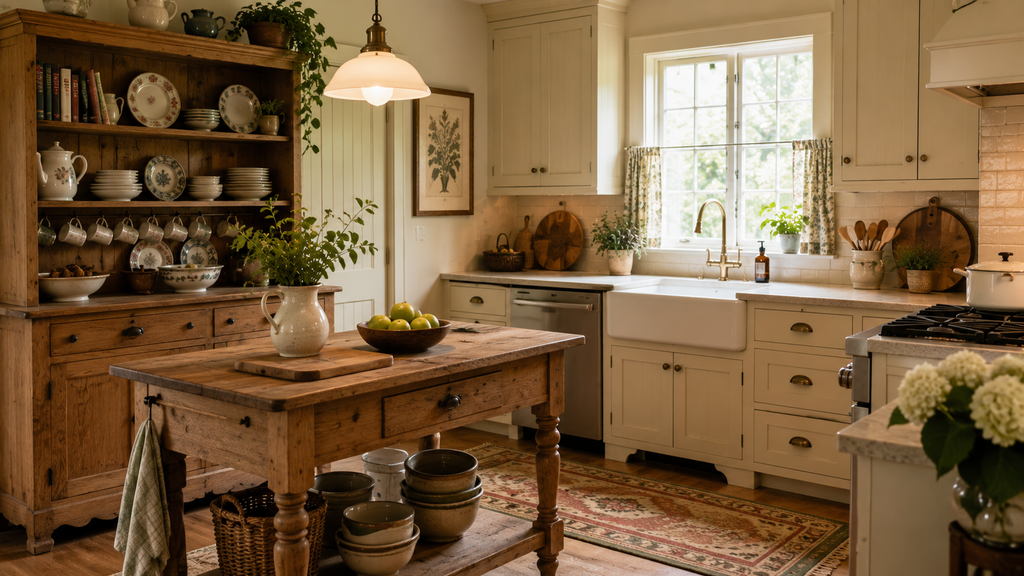
A freestanding hutch is particularly useful because it combines decoration and storage.
Use it for dishes, serving pieces, cookbooks, glassware, or textiles that you actually use. A glass front section can provide a display area while lower cabinets hide less attractive supplies.
This approach also reflects the furniture like quality associated with many older kitchens. Vintage kitchen inspiration frequently uses hutches, freestanding storage, and other pieces instead of relying entirely on continuous built in cabinetry.
If you have limited space, choose a smaller cabinet rather than filling an entire wall.
Choose a Period Feeling Light Fixture
Lighting has a major effect on whether vintage details feel convincing.
A simple pendant, schoolhouse style fixture, traditional glass shade, brass toned light, or another period inspired design can become a focal point without occupying much floor or counter space.
The fixture should still provide appropriate illumination for the kitchen. Decorative lighting is not a substitute for useful task lighting.
Layering is especially helpful in an older looking kitchen: a characterful overhead fixture can provide atmosphere while under cabinet or other task lighting supports food preparation. This approach has also been used in recent updates to historic kitchens where designers wanted to improve function without losing period character.
Display Everyday Kitchenware
Some of the best vintage kitchen decor is not technically decor at all.
A stack of patterned plates, a collection of old looking mugs, a ceramic pitcher, wooden utensils, a serving bowl, or a few attractive storage jars can make open shelving feel useful rather than staged.
The key is to display things you would genuinely use.
Instead of filling every shelf, leave some empty space between groups. A small collection of related objects usually has more visual impact than a shelf packed from edge to edge.
Add Vintage Artwork and Signs Carefully
Framed botanical prints, old food illustrations, small landscapes, recipe related artwork, or simple antique style prints can work beautifully in a kitchen.
Vintage signs can also create a strong retro effect, but they are easy to overdo. One meaningful sign is usually more convincing than a wall covered with unrelated advertisements and slogans.
Think about the wall as part of the kitchen rather than as a separate gallery. Artwork should relate to the room’s colors, furniture, or period.
Use Curtains, Runners, and Other Textiles
Textiles are particularly useful for renters because they can change the character of a kitchen without permanent alterations.
Try:
- Café curtains
- Simple gingham
- Floral fabric
- Striped tea towels
- Woven runners
- Small patterned cushions
- Fabric skirts on suitable freestanding furniture
Patterns associated with earlier kitchen styles—such as checks and florals—can establish a nostalgic mood quickly.
Use restraint. If the floor, wallpaper, curtains, and cabinets all have competing patterns, the room can become visually exhausting.
Introduce a Vintage Style Rug or Floor Pattern
A checkerboard floor is one of the most recognizable retro kitchen treatments, but you do not have to install a new floor to get the effect.
A washable or appropriately sized runner can introduce a similar graphic quality temporarily.
For a more traditional vintage feeling, look at the existing floor first. Older wood, tile, or other original surfaces may already provide the character you need.
Add One or Two Retro Appliances
A retro style refrigerator, range, toaster, mixer, or other appliance can become a focal point.
The important word is one or two.
A kitchen full of deliberately retro appliances can begin to look like a themed set. One standout appliance surrounded by simpler cabinetry often feels more natural.
If you own an actual vintage appliance, treat its condition and suitability as a practical issue rather than assuming that old automatically means better. Decorative character should never take priority over the kitchen’s basic needs.
Vintage style appliances and retro refrigerators are frequently used as visual anchors in vintage kitchen designs.
Use Wood for Warmth
Natural wood can soften a kitchen filled with painted cabinetry and hard surfaces.
Consider a wooden stool, cutting board, table, open shelf, cabinet, chair, or freestanding island.
You do not need every wood surface to be identical. A collected kitchen can actually benefit from modest variation, provided the undertones and overall scale work together.
A vintage wooden work table can also serve as an island, giving you both character and useful preparation space. This type of furniture like island is among the vintage kitchen features currently being revisited by designers.
Create a Small Open Shelf Display
Open shelving is useful for vintage decor because it gives attractive kitchenware a visible role.
But it should not become an excuse to store everything in sight.
Use shelves for a limited group of items:
- Everyday plates
- Mugs
- A few bowls
- Cookbooks
- Small plants
- Ceramic vessels
- A small collection of vintage pieces
Keep frequently used items within easy reach and move rarely used decorative objects to less accessible display areas.
Use a Vintage Table as an Island
If your kitchen has enough room, a small vintage table, butcher block style work table, or furniture like island can provide character without requiring a large built in island.
This is especially useful in kitchens where a massive modern island would overwhelm the room.
Make sure the piece leaves enough space for people to move comfortably around it. Vintage style should not interfere with the basic workflow between storage, preparation, cooking, and cleaning.
Add a Plate Rack or Dish Display
A plate rack can combine storage and decoration.
Instead of displaying decorative plates that never get used, consider keeping a small collection of attractive everyday dishes accessible.
Plate racks and built in dish displays are recurring elements in vintage kitchen inspiration, particularly where the kitchen is meant to feel more like a furnished room than a purely utilitarian workspace.
Bring in Brass, Copper, or Aged Metal Accents
Metal accents can reinforce the age and warmth of the design.
A brass toned faucet, copper cookware, aged looking hardware, metal hooks, or a vintage style light fixture may be enough.
You do not need to use the same finish everywhere. A kitchen with several related materials can feel more collected than one where every fitting comes from the same matching set.
How to Mix Vintage Pieces With a Modern Kitchen
You do not need an old house to create vintage kitchen decor.
In fact, mixing old and new is often the most practical approach.
Start with the modern elements that you cannot or do not want to change: appliances, countertops, cabinets, flooring, or lighting infrastructure. Then identify two or three areas where vintage character can be introduced.
For example:
Modern kitchen: white cabinets + modern appliances + stone counters
Vintage additions: antique style pendant + wooden stool + old ceramic collection
Or:
Modern kitchen: simple wood cabinets + contemporary backsplash
Vintage additions: freestanding hutch + patterned runner + vintage artwork
This works because the vintage pieces have room to stand out.
A similar strategy appears in successful period style renovations: modern storage and appliances can coexist with traditional materials, furniture like islands, old fashioned faucets, or preserved architectural details.
For a modern kitchen, resist the temptation to make every surface look old. A few convincing references to the past are usually enough.
Vintage Kitchen Decor for Small Kitchens
Small kitchens can actually work well with vintage styling because many vintage inspired details are compact.
Instead of adding large decorative furniture, focus on:
- A narrow wall shelf
- Small framed artwork
- A vintage runner
- A few attractive mugs
- A compact freestanding cabinet
- One statement light
- A small collection of dishes
- Hooks for frequently used utensils
- A curtain beneath a suitable open sink or shelf
Use vertical space carefully. A narrow plate rack or shelf can provide storage without consuming valuable counter space.
Be especially selective with open storage. If every wall becomes a display area, a small kitchen can quickly feel crowded.
A good rule is to let one area be decorative and keep the rest visually quiet.
How to Find Vintage Kitchen Pieces Without Overspending
You do not need to renovate the kitchen to introduce vintage character.
Start with what you already own.
Look through:
- Family kitchenware
- Old serving bowls
- Wooden utensils
- Framed artwork
- Secondhand furniture
- Existing curtains
- Decorative jars
- Old cookbooks
- Thrifted dishes
Secondhand furniture can be particularly useful because a small bureau, cabinet, table, or hutch may add much more character than several small decorative purchases. Recent real home examples also show how thrifted furniture and vintage finds can be repurposed into useful kitchen storage and islands.
A practical shopping order is:
Use what you have → thrift or buy secondhand → update small details → purchase new reproduction pieces only when needed.
This keeps the room from becoming a collection of newly manufactured objects that merely imitate age.
What to Avoid When Decorating a Vintage Kitchen
Vintage style becomes less convincing when every recognizable retro feature is used at once.
Avoid:
Too many themes.
A 1950s diner, English cottage, farmhouse, Victorian kitchen, and 1970s color palette do not necessarily belong together.
Too much open shelving.
Displaying everything creates visual clutter and makes cleaning and access harder.
Decorative objects that interfere with work surfaces.
The kitchen still needs room for chopping, mixing, serving, and everyday cooking.
Excessive signage.
A few pieces can feel nostalgic; an entire wall can feel like a restaurant set.
Perfectly matched “vintage” sets.
A collected look usually benefits from some variation in age, texture, and material.
Ignoring modern necessities.
There is no reason to hide every modern appliance or sacrifice useful storage just to make the kitchen look older.
Making every finish distressed.
Authentic character comes from the combination of materials, proportions, furniture, color, and objects—not simply from making everything look worn.
A Simple Vintage Kitchen Styling Formula
If you are unsure where to begin, use this five part approach:
1. Choose one era or mood.
Decide whether you prefer farmhouse, 1950s retro, midcentury, cottage, traditional, or simply collected vintage.
2. Establish the color.
Choose one dominant color and one or two supporting neutrals.
3. Add one large character element.
This could be a hutch, vintage table, distinctive light fixture, patterned floor, or standout appliance.
4. Add useful vintage objects.
Use dishes, cutting boards, cookbooks, utensils, bowls, or containers that contribute to everyday kitchen life.
5. Stop before the room becomes crowded.
Leave enough empty space for the important pieces to be noticed.
That final step matters. Vintage kitchens tend to feel inviting when they look collected over time, not when they look as though every available surface was decorated in one afternoon.
Final Takeaway
The strongest vintage kitchen decor does not depend on recreating a particular decade perfectly. It comes from choosing a few details with history, warmth, or period character and giving them enough space to work.
Start with the kitchen you already have. Preserve interesting architectural details when they make sense, improve storage where necessary, and introduce vintage character through furniture, lighting, color, textiles, hardware, artwork, and useful kitchenware.
If you are working with a modern kitchen, one or two strong vintage references may be enough. If you live in an older home, the original cabinets, floors, doors, or architectural details may already provide the foundation.
The result should still function like a modern kitchen—but feel as though it has a story.
FAQ
1. What is vintage kitchen decor?
Vintage kitchen decor uses furniture, colors, materials, lighting, textiles, artwork, hardware, and kitchenware inspired by or sourced from earlier periods. It can range from authentic vintage pieces to carefully chosen reproductions.
2. How can I make a modern kitchen look vintage?
Start with a few high impact changes such as vintage style lighting, traditional hardware, a freestanding cabinet, patterned textiles, warm colors, or vintage kitchenware. You do not need to replace the entire kitchen.
3. What colors work best for a vintage kitchen?
Cream, muted green, dusty blue, butter yellow, soft pink, warm white, olive, and earthy tones can work well. The best combination depends on the era and overall mood you want.
4. How do I decorate a vintage kitchen without making it look cluttered?
Choose a limited number of display areas and keep useful everyday items within them. Balance open shelving and displays with closed storage, and leave some counter and wall space empty.
5. Can vintage kitchen decor work in a small kitchen?
Yes. Use compact elements such as a patterned runner, small wall shelf, vintage artwork, attractive dishes, a narrow cabinet, or one distinctive light fixture. Avoid filling limited wall and counter space with decorative objects.
6. Is authentic vintage furniture better than new vintage style furniture?
Not necessarily. Authentic pieces can provide genuine character, while reproduction furniture may offer more predictable proportions or condition. Choose based on how the piece fits your space and how you intend to use it.
7. How can I decorate a vintage kitchen on a budget?
Start with items you already own, then look for secondhand dishes, artwork, furniture, and accessories. A single thrifted hutch or table can sometimes create more impact than many small decorative purchases.
8. How do I mix vintage decor with modern appliances?
Keep modern appliances if they work well for your kitchen, then surround them with vintage inspired cabinetry, lighting, furniture, textiles, and accessories. The contrast can make the vintage elements feel intentional rather than artificial.
for more tips