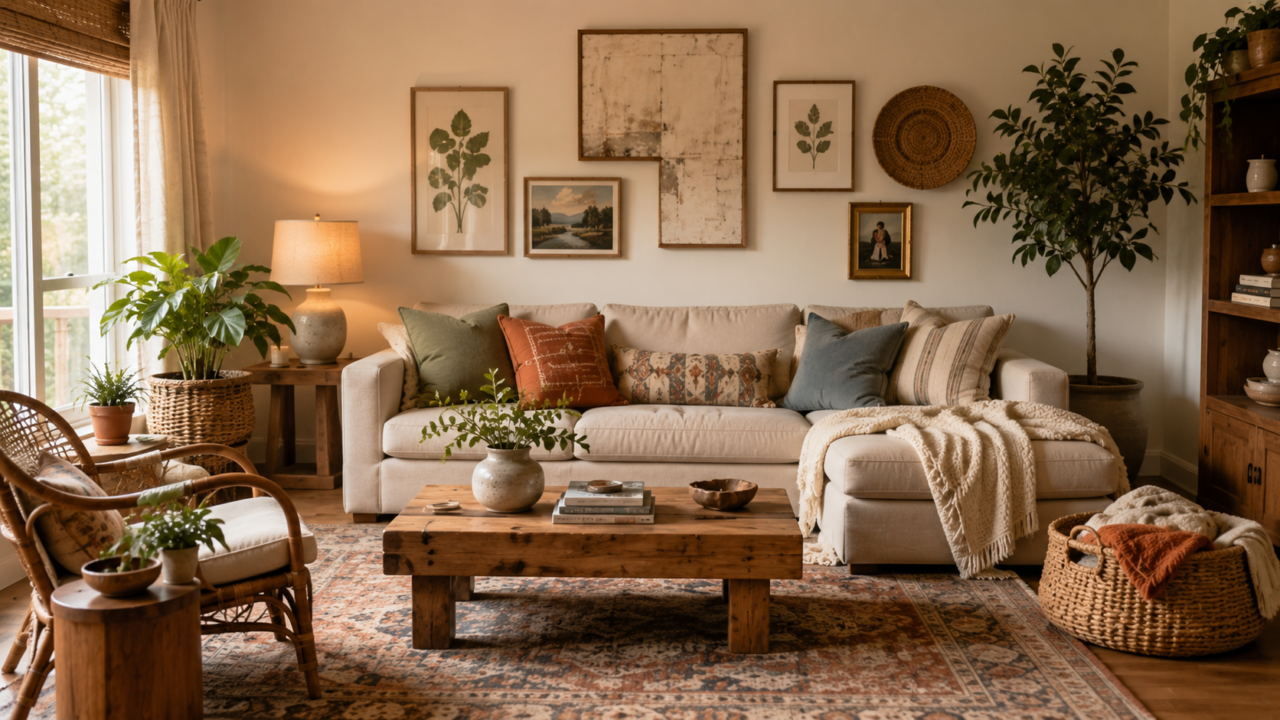
A boho living room can easily go too far. Add too many patterned pillows, baskets, plants, rugs, wall hangings, and decorative objects, and the relaxed look starts feeling crowded rather than collected.
Good boho living room decor is more about layering than accumulating. Natural materials, comfortable furniture, varied textiles, plants, vintage pieces, warm lighting, and objects with personality can create the look without making every surface busy.
The most successful rooms also leave enough empty space for everyday life. Furniture still needs to be comfortable, pathways need to remain clear, and storage needs to work for the people actually using the room.
Bohemian interiors commonly combine earthy colors, natural materials, handmade looking pieces, plants, varied textiles, and objects collected from different influences. Current designer guidance also emphasizes keeping those layers cohesive through a controlled palette and thoughtful material mixing rather than decorating every available surface.
What Makes a Living Room Feel Boho?
Boho style does not depend on one particular piece of furniture or accessory. It comes from the way different elements are combined.
Think of:
- Natural wood
- Rattan and woven fibers
- Linen and cotton textiles
- Vintage or secondhand furniture
- Plants and botanical elements
- Patterned rugs
- Comfortable seating
- Handmade looking ceramics
- Collected artwork
- Warm, earthy colors
- Soft and layered lighting
The room should feel personal rather than perfectly matched.
That means a modern sofa can sit beside a vintage wooden table. A contemporary lamp can work with an older rug. A neutral room can gain character through terracotta, olive, rust, mustard, dusty blue, or other muted colors.
The goal is not to make everything look like it came from the same collection.
Start With a Comfortable, Practical Foundation
Before adding decorative pieces, look at the furniture arrangement.
A boho living room still needs to function as a living room. The sofa should be comfortable, seating should face the main conversational area, and people should be able to move through the room without constantly walking around furniture.
If possible, avoid pushing every piece directly against the wall simply because there is space there. Furniture can sometimes be pulled slightly away from walls to create more breathing room and establish clearer activity zones. Keeping pathways open is also important for making a layered room feel spacious rather than crowded.
Start with:
- Sofa or main seating
- Coffee table or ottoman
- Additional seating if needed
- Rug
- Lighting
- Storage
- Decorative layers
This order prevents you from decorating around objects that later have to be moved.
25 Boho Living Room Decor Ideas
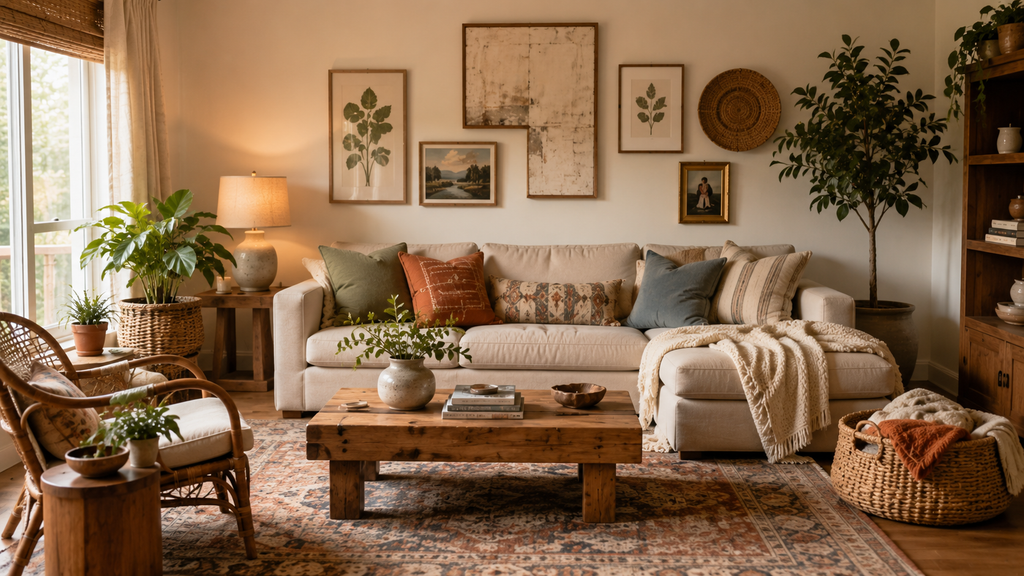
1. Layer Natural Textures
Texture is one of the easiest ways to create boho character without relying on strong colors.
Combine wood, rattan, linen, cotton, wool, ceramic, leather, and woven fibers.
For example, a linen sofa can work with a jute style rug, wooden coffee table, woven basket, ceramic vase, and cotton throw.
The materials do not need to match. They simply need to feel compatible.
Natural materials and tactile surfaces are frequently associated with contemporary bohemian interiors because they add visual depth without requiring a large amount of decoration.
2. Build an Earthy Color Palette
Start with a calm base such as warm white, cream, beige, tan, or soft gray.
Then introduce a few stronger colors through removable pieces:
- Rust
- Terracotta
- Olive
- Mustard
- Dusty blue
- Deep brown
- Muted green
Keeping the larger furniture pieces relatively restrained gives you more freedom to change pillows, artwork, rugs, or throws later.
3. Bring in Plenty of Greenery
Plants are a natural fit for boho rooms, but you do not need to turn the living room into an indoor jungle.
Try a combination of:
- One larger floor plant
- A smaller plant on a shelf
- A trailing plant
- A simple vase of branches
Vary the height rather than putting plants at the same level.
Bohemian interiors frequently use plants and botanical references to bring natural forms and color into the room.
4. Choose Relaxed, Comfortable Furniture
Avoid furniture that looks overly formal.
A deep sofa, soft armchair, upholstered ottoman, wooden lounge chair, or relaxed sectional can provide the comfortable foundation associated with boho spaces.
The important part is not buying furniture specifically labeled “boho.” Look for pieces with inviting proportions, natural looking materials, soft upholstery, or interesting shapes.
5. Add One Vintage or Secondhand Piece
A single older piece can give a room much more personality than a collection of new accessories.
Consider:
- A vintage side table
- Old wooden cabinet
- Antique mirror
- Secondhand chair
- Vintage rug
- Older ceramic vessel
- Small wooden stool
One distinctive piece also prevents the room from looking like a perfectly coordinated furniture set.
6. Layer Rugs Carefully
A rug can anchor the seating arrangement and introduce pattern.
For larger rooms, layering a smaller patterned or vintage style rug over a larger natural fiber rug can create additional depth while helping the smaller rug work with the scale of the room. This layered approach has also appeared in current living room design discussions.
However, more rugs are not automatically better. If the floor already has strong pattern or the room is small, one well sized rug may be enough.
7. Mix Pillows Without Making the Sofa Busy
Boho rooms are naturally suited to mixed textiles.
Instead of buying ten completely different cushions, establish a small visual connection.
For example:
- One solid neutral
- One geometric pattern
- One subtle stripe
- One textured cushion
- One muted botanical print
Repeat one or two colors across the group so the patterns feel related.
8. Use Rattan and Woven Materials
Rattan, cane, wicker, seagrass, and other woven materials can introduce texture without adding strong color.
Use them selectively:
- Basket
- Pendant light
- Accent chair
- Storage cabinet
- Mirror frame
- Decorative tray
- Plant basket
Woven materials are especially useful when the rest of the room is neutral.
9. Create a Collected Gallery Wall
Boho wall decor does not need to consist entirely of macramé or identical framed prints.
Combine a few different forms:
- Botanical artwork
- Photography
- Vintage prints
- Small paintings
- Decorative plates
- Textile art
- Simple mirrors
A common visual thread helps the arrangement feel intentional. That thread might be a shared color palette, similar frame finishes, natural subjects, or simply a consistent warm tone.
10. Decorate With Things That Actually Mean Something
A room feels more collected when some objects have a reason for being there.
Display books you genuinely read, artwork you enjoy, ceramics you found interesting, travel souvenirs, inherited pieces, or objects made by local craftspeople.
This approach also keeps you from buying decorative items simply to fill empty shelves.
11. Use Warm, Layered Lighting
One ceiling fixture rarely provides enough atmosphere for a comfortable living room.
Combine different sources such as:
- Floor lamp
- Table lamp
- Pendant
- Wall light
- Small accent light
The point is to create several usable lighting levels rather than one bright source.
Warm lighting works particularly well with wood, woven materials, earthy colors, and textured fabrics.
12. Introduce Organic Shapes
Boho interiors often benefit from softer silhouettes.
Consider a:
- Round coffee table
- Curved chair
- Arched mirror
- Rounded lamp
- Organic shaped side table
- Soft edged ottoman
Organic shapes can break up rooms dominated by rectangular sofas, cabinets, windows, and shelving. House Beautiful similarly highlights curved furniture and less rigid forms as useful elements in bohemian rooms.
13. Style the Coffee Table Naturally
The coffee table should remain usable.
Instead of covering the entire surface, try a simple arrangement:
Tray + book + ceramic object + small plant or vase
A tray can also make it easier to move the decorative grouping when you need the table for drinks, games, or everyday activities.
14. Use Baskets as Real Storage
Woven baskets are attractive, but they become much more useful when they solve an actual storage problem.
Use them for:
- Throws
- Children’s toys
- Books
- Remote controls
- Magazines
- Pet accessories
Choose basket sizes according to what they need to hold rather than buying baskets first and trying to find things to put inside them.
15. Soften the Windows With Fabric
Curtains can make a living room feel warmer and more relaxed.
Linen look, cotton, woven, or softly textured curtains can work particularly well with boho interiors.
Choose a color that relates to the existing palette rather than automatically selecting another pattern.
16. Add Pattern in Small Doses
Boho style allows pattern, but pattern works better when it has somewhere to rest.
If you have a strongly patterned rug, keep some pillows and larger upholstery quieter.
If the furniture is mostly plain, you can use a patterned throw, curtains, cushions, or artwork to add interest.
The goal is variation rather than visual competition.
17. Mix Old and New
A completely vintage room can sometimes feel themed.
A completely new room can feel too coordinated.
Combining both usually creates more personality.
Try pairing a contemporary sofa with an older wooden side table, or modern lighting with a vintage rug.
The contrast makes the individual pieces more noticeable.
18. Let Wood Warm Up a Neutral Room
If your living room is mostly cream and beige, wood can provide the visual warmth it needs.
You might introduce:
- Wooden coffee table
- Open shelving
- Timber side table
- Wood framed artwork
- Cane furniture
- Small wooden stool
You do not need every wood tone to match exactly. Some variation can actually support the collected appearance.
19. Create a Small Reading Corner
If you have an unused corner, give it a purpose.
A comfortable chair, floor lamp, small side table, and basket for books or blankets can create a useful secondary zone.
This is particularly helpful in larger living rooms where one sofa arrangement leaves awkward unused space.
20. Use Low Level Seating Where It Makes Sense
Floor cushions, poufs, and low ottomans can add flexibility.
They are especially useful when you occasionally need additional seating but do not want another large chair permanently occupying the room.
Keep them easy to move so they do not interfere with everyday circulation.
21. Make Books Part of the Decor
Books naturally add color, texture, and personality.
Stack a few larger books on a coffee table or place a small edited collection on a shelf.
Avoid filling every shelf with books simply because you want the room to look intellectual. Leave space between groups so the shelving remains visually breathable.
22. Use Mirrors to Add Light and Shape
A large mirror can help reflect daylight and make a room feel more open.
For a boho look, consider a simple wood, rattan, woven, or softly shaped frame.
Place it where it reflects something worthwhile rather than pointing directly toward an unattractive corner.
23. Protect Negative Space
This may be the most important idea in successful boho living room decor.
Boho does not mean every wall, shelf, table, and corner needs an object.
Leave some shelves partially empty. Keep part of the coffee table clear. Allow the rug and furniture to remain visible.
Empty space gives the more interesting pieces room to stand out.
24. Adapt Boho Style to Small Living Rooms
Small rooms need editing.
Instead of using several large decorative pieces, concentrate the style into a few high impact elements:
- One appropriately sized rug
- Comfortable compact sofa
- One textured chair or pouf
- Vertical plant
- Small gallery wall
- Woven storage basket
- Warm floor or table lamp
Use wall height when floor space is limited. Floating shelves, wall mounted lighting, and vertical plants can provide personality without consuming much floor area.
25. Build the Look Gradually
Do not try to finish the room in one shopping trip.
Start with furniture and the rug. Then add lighting. After that, introduce textiles, plants, artwork, and storage.
Live with the room for a while.
You will notice which surfaces actually need something and which spaces are better left alone.
That approach usually produces a more personal result than buying a complete set of matching boho accessories.
How to Keep Boho Decor From Looking Cluttered
The difference between layered and cluttered is usually editing.
Before adding another object, ask:
- Does this add texture, color, function, or personality?
- Do I already have something serving the same purpose?
- Does this object compete with something more important?
- Does it make the room harder to clean?
- Does it interfere with furniture or pathways?
- Would the room look better with a little empty space around it?
Use grouping rather than scattering.
Three related objects on a shelf can look more intentional than eight unrelated objects spread across the entire shelf.
The same principle applies to textiles. Mixing materials creates interest, but repeating too many patterns can make the room visually tiring.
Boho Living Room Decor on a Budget
You do not need to replace your furniture to create a boho look.
Start with what you already own.
No cost changes
Rearrange furniture, remove unnecessary accessories, group existing books, move plants to different heights, and experiment with which objects deserve display space.
Low cost changes
Add cushion covers, throws, baskets, secondhand artwork, plants, or a simple lamp.
Moderate improvements
A better sized rug, comfortable accent chair, vintage cabinet, or substantial floor lamp can have a bigger visual effect.
Higher investment changes
If the room genuinely needs new furniture, prioritize pieces that improve everyday use first. A comfortable sofa or useful storage cabinet will contribute more than a large collection of decorative accessories.
Secondhand shopping can also work particularly well for boho rooms because the style naturally accommodates pieces from different periods and sources.
A Simple Formula for Putting the Room Together
If you are starting from scratch, use this basic sequence:
1. Choose the foundation:
Sofa, main seating, and practical layout.
2. Anchor the room:
Add a suitably sized rug and coffee table.
3. Introduce natural materials:
Wood, rattan, woven fibers, ceramic, or linen.
4. Add lighting:
Use at least two useful sources rather than relying entirely on overhead lighting.
5. Layer textiles:
Pillows and throws should introduce texture and a controlled amount of pattern.
6. Add greenery:
Use different heights and keep plant placement practical.
7. Bring in personality:
Artwork, books, vintage pieces, and meaningful objects.
8. Edit:
Remove anything that makes the room difficult to use or visually crowded.
This creates a room that feels layered without requiring every possible boho element.
Common Boho Decorating Mistakes
Using too many patterns
Boho style can handle pattern, but several competing patterns need some visual connection.
Buying too many accessories
More objects do not automatically make a room more bohemian. They can simply create clutter.
Making everything beige
Neutral boho rooms can be beautiful, but natural materials and texture need some variation in tone and surface to prevent the room from looking flat.
Treating plants as decoration only
Place plants where they can actually work with the room’s available light and where caring for them is practical.
Ignoring furniture scale
A small room can quickly become overwhelmed by an oversized sofa, large coffee table, and multiple accent chairs.
Making the room too themed
Macramé, rattan, tassels, patterned rugs, plants, and vintage pieces can all work together—but you do not need every recognizable boho element.
The strongest rooms usually feel personal rather than like a checklist.
Final Takeaway
Good boho living room decor is less about following a fixed style formula and more about creating a comfortable room with layers of texture, natural materials, personal objects, and relaxed color.
Start with a practical furniture arrangement. Add a rug and useful lighting, then build texture through wood, woven materials, textiles, plants, and ceramics. Bring in vintage or meaningful pieces gradually rather than filling every surface.
Most importantly, leave some room for the room itself to breathe.
A boho living room should feel collected, comfortable, and lived in—not like a display of every bohemian accessory you could find.
FAQ
What is boho living room decor?
Boho living room decor combines relaxed furniture, layered textiles, natural materials, plants, artwork, vintage or collected pieces, and earthy or expressive colors. The style is eclectic, but the individual elements should still work together visually.
How can I make my living room look boho?
Start with comfortable furniture and a practical layout. Add a textured rug, woven or wooden elements, plants, layered pillows and throws, warm lighting, and a few pieces of artwork or vintage decor. Build the look gradually instead of decorating every surface at once.
What colors work best in a boho living room?
Warm neutrals such as cream, beige, tan, and brown make a useful base. Accent colors can include terracotta, rust, olive green, mustard, dusty blue, or other muted earthy tones.
Can a small living room have boho decor?
Yes. In a small room, focus on a few high impact elements rather than lots of accessories. Use vertical storage, appropriately scaled furniture, baskets, wall decor, plants, and layered textures while keeping pathways clear.
Does boho decor have to be colorful?
No. A neutral boho living room can use cream, beige, brown, natural wood, woven materials, plants, and varied textures to create interest without strong colors.
How do I keep a boho living room from looking cluttered?
Edit decorative objects, group related pieces, keep some shelves and surfaces empty, and make sure furniture does not block pathways. Use baskets for practical storage so everyday items have designated places.
What materials work well in a boho living room?
Wood, rattan, cane, woven fibers, linen, cotton, wool, leather, ceramic, and natural looking stone can all work well. Combining several materials gives a neutral room more depth.