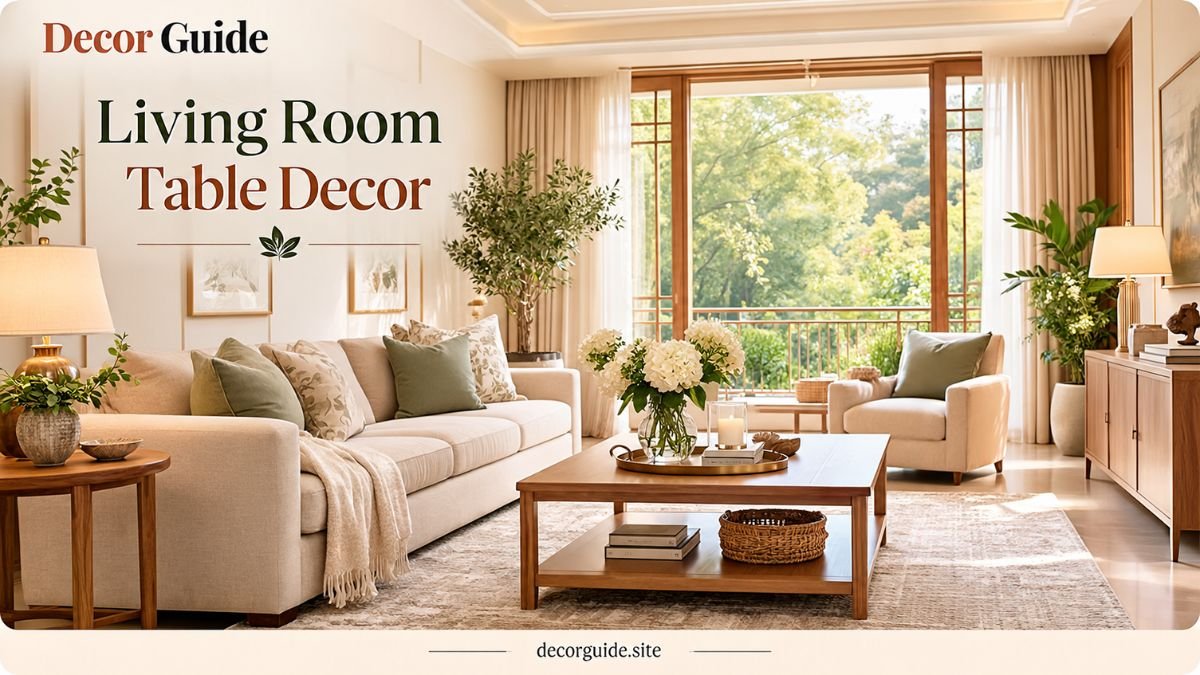
A living room can have comfortable seating, attractive curtains, and beautiful wall decor, yet something may still feel unfinished. Often, the missing detail is the way the tables are styled. Thoughtful living room table decor brings the different elements of a room together without requiring a complete makeover.
The easiest approach is to combine a few useful accessories, vary their heights, and leave enough open space for everyday activities. A coffee table might hold a small tray, a favorite book, and a simple vase. A side table may need nothing more than a lamp and a coaster. Console tables can accommodate a larger arrangement because they often sit against a wall.
The goal is not to fill every surface. It is to make each table look intentional while keeping your living room comfortable and practical.
Start With the Right Living Room Table Decor Plan
Before buying decorative objects, look at the tables you already have and decide what each one needs to do. A coffee table in the middle of the seating area serves a different purpose from a narrow console beside the entrance.
Start by removing everything from the surfaces. Clean the tables, then return only the items you regularly use. This simple step reveals how much room you actually have for decoration.
Consider the overall style of your living room, too. A room with natural wood furniture, linen cushions, and soft neutral colors may suit ceramic vases, woven trays, and greenery. A contemporary room with glass furniture and clean lines might look better with sculptural accessories and a limited color palette.
Think about your daily habits. If your family eats snacks in the living room, leaves remote controls nearby, or enjoys board games, your table arrangement should accommodate those activities. Beautiful decor that makes ordinary tasks difficult will quickly become frustrating.
Choose a Style That Matches Your Room
Your table decor should feel connected to the rest of the space rather than looking like a separate display.
For a modern living room, choose simple shapes, smooth finishes, and a few carefully selected objects. Traditional rooms can accommodate decorative bowls, framed photographs, classic lamps, and more detailed accessories. Rustic spaces often benefit from natural wood, textured ceramics, woven materials, and branches in a sturdy vase.
You can also mix styles. A contemporary coffee table with a traditional ceramic bowl can create an interesting contrast. The key is to repeat at least one element from elsewhere in the room, such as a color, material, or finish.
Consider the Table Shape and Size
A round coffee table often works well with a compact central arrangement. A rectangular table provides more room for grouping objects along one side or dividing the surface into separate areas.
Square tables can support a centered tray or a balanced arrangement with objects placed at different heights. Narrow side tables usually need fewer accessories because their surfaces are already limited.
Do not judge a table arrangement by the number of decorations it contains. Judge it by whether the objects fit comfortably and leave room for practical use.
Living Room Table Decor Ideas for Coffee Tables
Coffee tables usually attract attention because they sit in the center of the seating area. They are also used constantly, so the best arrangements combine appearance with convenience.
One reliable method is to create a small group of objects with different shapes and heights. For example, place a low decorative tray beside a short stack of books and a vase with greenery. The tray creates a defined area, the books add a horizontal element, and the vase provides height.
You do not need all three items. A single beautiful bowl or a small plant can work just as well on a compact table.
Create a Simple Centerpiece
A centerpiece gives the table a focal point. It could be a ceramic vase, a decorative bowl, a small plant, or a sculptural object.
Choose something that suits the scale of the furniture. A large vase may look attractive on a substantial coffee table but overwhelm a narrow one. Similarly, a tiny ornament can disappear on a large surface.
Keep sightlines in mind. Tall arrangements placed directly between facing seats can make conversation feel awkward. If you prefer tall flowers or branches, position them slightly to one side or choose a location that does not block views across the room.
Fresh flowers create a changing seasonal display, while dried stems and artificial greenery can provide a longer lasting alternative.
Style a Decorative Tray
A tray is useful when you want your living room table decor to look organized. It groups small objects together and makes them easier to move when the table is needed for another activity.
Choose a tray that complements the furniture. Wood adds warmth, metal introduces a sharper finish, and woven materials create a relaxed look.
Place two or three compatible items inside it. A small bowl, a candle, and a compact decorative object may be enough. Leave part of the tray visible so the arrangement does not appear crowded.
If you keep remote controls on the coffee table, a tray can also give them a designated place. However, everyday objects should not compete with the centerpiece for attention.
Add Books for Height and Personality
Decorative books introduce color, texture, and a personal touch. They can also raise a small object so that it becomes more visible within the arrangement.
Select books with covers that complement your room. Interior design, photography, travel, and art books can all work, provided they reflect your interests.
Stack a small number of books horizontally and place a lightweight decorative object on top if the arrangement feels balanced. Avoid building a tall, unstable pile or covering the entire surface with reading material.
The books should still be easy to pick up and read. Decoration works best when it remains connected to how you actually live.
Style Side Tables Without Making Them Cluttered
Side tables are usually smaller than coffee tables, which means every object has a greater visual impact. Their placement beside sofas and armchairs also makes them important for everyday comfort.
A lamp is often the most useful starting point. It provides light for reading and creates a warm atmosphere in the evening. Add a coaster or a small dish for frequently used items, then consider whether anything else is necessary.
If the table already has a large lamp, there may be very little room left for decoration. That is perfectly fine.
Use a Lamp and One Decorative Accent
A lamp with an attractive base can serve as both a practical item and a decorative feature. Choose a design that suits the height of the table and does not feel oversized beside the seating.
You might add a small plant, a framed photograph, or a compact bowl beside the lamp. Keep the arrangement simple enough that you can place a drink or book on the table without moving everything.
If you are updating the atmosphere of the room, consider how the table lamp works with other light sources. Our guide to Accent Lighting Living Room can help you think about layered lighting and the role different fixtures play in a comfortable living space.
Keep Everyday Essentials Within Reach
Side tables should support the people using the room. Coasters, reading glasses, a book, or a small storage container may be more valuable than another decorative accessory.
Choose a small dish for loose items or a lidded container for things you prefer to keep out of sight. The aim is to give everyday belongings a home without making the table look like a storage station.
In a family living room, consider rounded accessories and stable objects that are less likely to fall when someone brushes past the table.
Decorate a Console Table With Balance and Purpose
Console tables offer a different opportunity because they often stand against a wall behind a sofa or near an entrance. Their longer surfaces allow you to create a more extended arrangement.
Begin with the largest object, such as a table lamp, vase, or framed piece of art leaning securely against the wall. Add smaller accessories around it and leave some empty space between groups.
For a balanced look, you can place a lamp at one end and a vase or plant at the other. A central bowl or a small collection of books can connect the two sides. The arrangement does not need to be perfectly symmetrical to feel complete.
Add Artwork and Decorative Objects
A mirror or framed artwork above the console can make the entire area feel more connected. Choose a piece that relates to the width of the furniture and the proportions of the wall.
On the tabletop, combine objects with different visual weights. A solid ceramic vase can balance a lighter frame, while a small stack of books can fill an empty area without making the arrangement feel heavy.
Make sure frames and mirrors are securely supported. Avoid placing valuable or fragile objects where they could easily be knocked over.
Use Baskets for Hidden Storage
If the console has open space underneath, baskets can store blankets, magazines, or other items that tend to collect in the living room.
Choose baskets that fit beneath the table without blocking walkways or making the furniture difficult to access. Matching baskets create a uniform appearance, while different natural textures can look relaxed and collected.
This is particularly helpful in smaller homes where the living room must handle several purposes. Storage should solve a real problem rather than simply fill an empty space.
Choose Colors and Materials That Work Together
The most attractive living room table decor often uses a limited range of colors and materials. This does not mean every accessory must match. It means the different pieces should feel related.
Start with the colors already present in your sofa, rug, curtains, and furniture. If your room uses beige, cream, and warm wood, you might introduce muted green, terracotta, or soft brown through smaller accessories.
A room with gray upholstery and black furniture could benefit from white ceramics, clear glass, natural wood, or a restrained accent color.
Combine Different Textures
Texture helps an arrangement feel interesting even when the colors are similar. Smooth ceramic, clear glass, natural wood, woven fibers, and soft fabric each create a different visual effect.
Try combining one smooth object with a textured material. A glass vase on a wooden tray, for example, creates contrast without adding another color.
Avoid using too many competing finishes in a small arrangement. If every object has a different pattern, metallic finish, and texture, the display may feel busy.
Bring Nature Into the Room
Plants and natural materials can soften the appearance of a living room table. A small potted plant, fresh flowers, or a vase with branches can add life without requiring many accessories.
Choose plants according to the available light and your ability to care for them. If the table is in a dim corner, select a suitable low light plant or use a quality artificial alternative.
Protect wooden surfaces from water by using a suitable saucer or waterproof container. Also consider pets and children when choosing plants and decorative materials.
Living Room Table Decor for Small Spaces
Small living rooms need thoughtful arrangements because tables often perform several jobs. A coffee table may hold drinks, books, and a laptop, while a side table might double as a bedside surface in a studio apartment.
The solution is not to avoid decoration completely. It is to choose accessories that use space efficiently.
Keep the Surface Mostly Clear
Start with one main decorative item and one smaller accessory. A compact vase and a coaster holder may be enough for a narrow table.
If you regularly use the surface for meals or work, select objects that can be moved together easily. A small tray makes this simpler because you can lift the entire arrangement when extra space is needed.
Avoid spreading tiny ornaments across every corner. Several small items can create more visual clutter than one carefully chosen piece.
Choose Furniture With Built In Storage
If your table has a lower shelf, drawer, or hidden compartment, use it for items that do not need to remain visible. Remote controls, chargers, magazines, and spare coasters can stay nearby without taking over the tabletop.
A storage ottoman can serve as an alternative to a traditional coffee table when extra flexibility is important. Use a stable tray when placing drinks on a soft surface, and check that the arrangement suits the way your household uses the room.
Furniture should be chosen according to actual storage needs and available floor space, not simply because a particular design looks attractive.
Use Height Carefully
A compact table can still look interesting when its accessories vary in height. A short bowl beside a small vase may create enough contrast without taking up much room.
Do not use tall objects simply to make the arrangement more noticeable. In a narrow living room, low accessories may preserve a more open view and make the seating area feel less crowded.
Budget Friendly Living Room Table Decor Ideas
You can refresh a table without replacing the furniture or purchasing an entire collection of accessories. Begin with items you already own and rearrange them before deciding what is missing.
A useful approach is to set a budget based on the problem you want to solve. If the table looks empty, one centerpiece may be sufficient. If it feels cluttered, you may need a storage solution rather than more decorations.
Free and Low Cost Updates
Move a favorite book from a shelf to the coffee table, reuse a suitable bowl, or relocate a small plant from another part of the room. Try grouping existing objects on a tray you already own.
You can also rotate decorations from season to season instead of displaying everything at once. This gives familiar accessories a fresh appearance without adding more belongings.
When shopping on a limited budget, look for useful items first. A coaster set, small tray, or attractive storage container may provide more value than an ornament with no practical purpose.
Mid Range Improvements
If you want a more noticeable change, consider replacing one item that no longer suits the room. A new lamp, vase, or tray can update the appearance without requiring a complete redesign.
Choose the item that will make the greatest difference to the whole arrangement. For example, a lamp may improve both the appearance and usability of a side table, while a well sized tray can organize an untidy coffee table.
Compare the size, material, and maintenance needs before purchasing. A decorative object should fit the furniture and serve a clear purpose.
Higher Cost Changes
Sometimes the table itself is the problem. It may be too large for the seating area, too small for everyday use, or difficult to maintain.
If you decide to replace it, measure the available space and consider how people move around the furniture. A beautiful table that blocks a walkway or leaves little room for seating will not improve the living room.
Choose durable materials that suit your household. Glass may help a room feel visually lighter, while wood can introduce warmth and texture. The right choice depends on your space, daily habits, and preferred style.
Common Living Room Table Decor Mistakes to Avoid
One common mistake is filling the entire surface with decorative objects. This leaves little room for drinks, books, or other everyday activities. Remove a few items and see whether the remaining pieces look more intentional.
Another problem is using accessories that are all the same height. The arrangement can appear flat, particularly on a large coffee table. Introduce gentle variation with a low tray, a horizontal stack of books, and a taller vase.
Poor scale can also affect the result. Large accessories may overwhelm a small table, while tiny objects can look lost on a substantial surface. Consider the table and nearby furniture as one visual group.
Do not ignore maintenance. Delicate fabrics, unstable ornaments, and water sensitive materials may require more care than your household can comfortably provide.
Finally, avoid copying a styled photograph without considering your own needs. A display that works in a spacious show home may be inconvenient in a busy family living room. Good decor should look attractive in everyday life, not only when nobody is using the room.
How to Create a Finished Look Step by Step
Once you have selected your accessories, put the arrangement together gradually.
First, clear the table and decide which items must remain available for everyday use. Next, select one main decorative piece that suits the size and style of the furniture.
Add a second object with a different shape or height. This could be a book, bowl, plant, or small lamp. If the table is large, consider grouping the objects on a tray or creating two separate arrangements with open space between them.
Step back and look at the table from the main seating positions. Check whether the display blocks the view, feels crowded, or looks too small for the furniture.
Move the objects until the arrangement feels balanced. Then use the table normally for a day or two. If you keep moving the same decoration to make room for drinks or books, simplify the arrangement.
The best living room table decor is not necessarily the most elaborate. It is the arrangement that suits the room, supports your routine, and still looks good after the living room has been used.
Frequently Asked Questions
What should I put on a living room coffee table?
A tray, decorative bowl, small vase, plant, or a few books can work well. Choose items that suit the size of the table and leave enough room for everyday use.
How many decorations should a coffee table have?
There is no fixed number. A small table may need only one or two objects, while a larger surface can accommodate a few grouped accessories. The arrangement should not interfere with normal activities.
How do I decorate a glass living room table?
Use a small number of accessories with interesting shapes or textures. Ceramic objects, books, and a compact plant can add contrast without hiding the glass surface. Use suitable protective pads to prevent scratches.
Should living room table decor match the sofa?
It does not need to match exactly. Choose colors or materials that complement the sofa, rug, curtains, or other furniture so the room feels connected rather than overly coordinated.
How can I decorate a living room table for different seasons?
Change a few small accessories rather than replacing the entire arrangement. Fresh flowers, seasonal branches, a different decorative bowl, or a new cushion color elsewhere in the room can create a seasonal feeling.
How do I keep a decorated coffee table clean?
Keep the arrangement simple and use trays to group smaller items. Leave accessible areas for wiping the surface, use coasters, and choose accessories that are easy to lift and clean around.