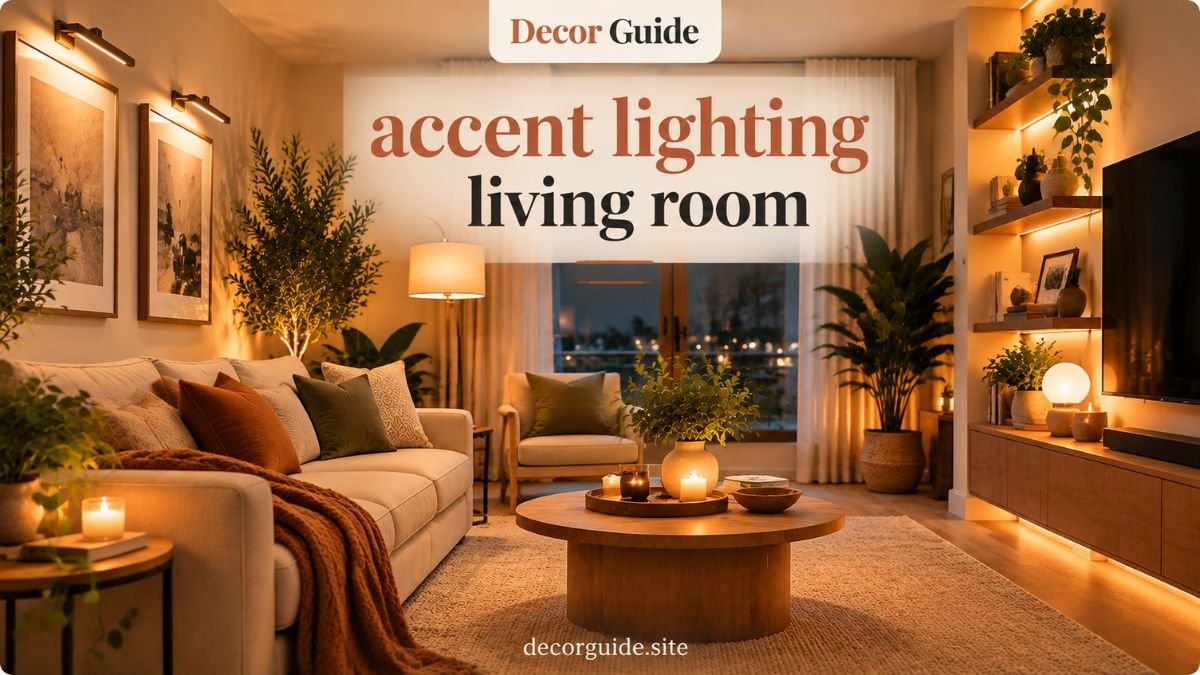
Accent lighting can make a living room feel more comfortable, balanced, and visually interesting without changing the entire room. Instead of using one bright ceiling fixture for everything, you can add smaller sources of light to highlight artwork, shelves, architectural details, plants, or decorative areas. The key is to decide what you want the light to draw attention to, then place the fixture where it supports that purpose. Good accent lighting living room ideas usually combine several subtle light sources rather than making one lamp the main feature.
What Is Accent Lighting in a Living Room?
Accent lighting is lighting used to draw attention to a particular object, area, or feature. In a living room, that might be a piece of artwork, a bookcase, a textured wall, a plant, or a decorative display.
It is different from general room lighting.
Ambient lighting provides overall illumination.
Task lighting helps with activities such as reading, writing, or working.
Accent lighting adds focus and visual interest.
These three types can work together. For example, your ceiling fixture may provide general light, a floor lamp can help beside a chair, and a small directional light can highlight artwork.
The goal is not to make every corner equally bright. Instead, accent lighting helps create areas of visual focus.
How to Plan Accent Lighting in Your Living Room
Before buying a new fixture, look around the room during the evening and identify the areas that currently disappear into darkness.
Ask yourself:
- Is there artwork that deserves attention?
- Does a bookshelf look flat at night?
- Is one corner too dark?
- Does the room have interesting architectural details?
- Would a plant or decorative object look better with a little light?
- Is the main ceiling light too harsh when used alone?
Once you know what needs attention, choose the lighting type that suits that area.
This simple process prevents a common mistake: buying attractive lamps without knowing where they will actually be useful.
1. Highlight Artwork on the Wall
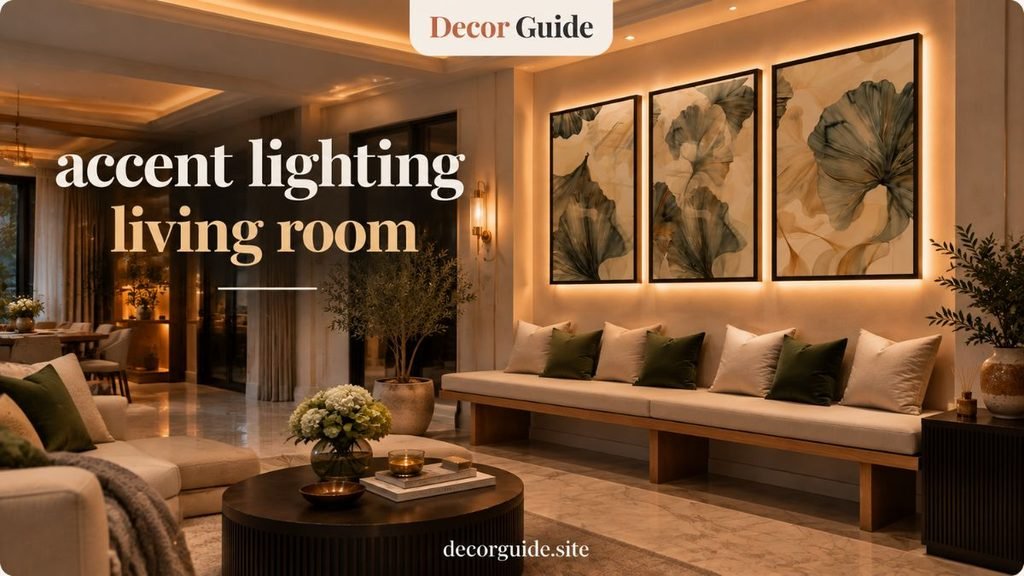
Artwork is one of the easiest places to use accent lighting.
A directional light can draw attention toward a painting, framed print, gallery wall, or other wall decoration. The light should support the artwork rather than becoming more noticeable than the artwork itself.
If you have several pieces arranged together, think about the whole display rather than treating every frame as a separate project.
For a single large piece, one carefully positioned light may be enough.
For a gallery wall, you can use lighting that spreads across the arrangement.
Avoid placing a very harsh light directly in front of glossy artwork because reflections can make the piece difficult to see.
2. Add Light to a Bookshelf
Open shelving often looks attractive during the day but can become a dark block in the evening.
Small lights can make shelves easier to see and can emphasize books, ceramics, framed photos, or other objects.
The best approach depends on the shelf design.
For open shelves, lighting can be placed so that it illuminates the display without creating distracting bright spots.
For a tall bookcase, lighting at different levels can help prevent the top or bottom from disappearing into shadow.
You do not need to illuminate every object. Choose the sections you want people to notice.
3. Use a Floor Lamp to Create a Focused Corner
A floor lamp can provide both practical and decorative value.
Place one beside a reading chair, sofa end, console, or otherwise empty corner. If the lamp has an adjustable or directional shade, you can point the light toward a specific area.
This works particularly well when the main ceiling light is positioned in the center of the room but the seating area feels dark.
Choose the lamp based on the job you need it to perform. If the corner is mainly for reading, useful task lighting may matter more than purely decorative accent lighting.
If the corner already has enough functional light, a softer decorative fixture may be more appropriate.
4. Light a Decorative Wall
An interesting wall does not have to disappear at night.
Accent lighting can emphasize:
- Textured walls
- Decorative panels
- Stone or brick surfaces
- Wall art
- Architectural details
- Display niches
The position of the fixture changes the effect.
A light aimed toward the wall can emphasize its texture. A directional fixture aimed at a specific decoration creates a stronger focal point.
Before installing anything permanently, test the position if possible. Shadows can look very different depending on the surface.
5. Make a Living Room Corner Feel Intentional
An unused corner can make a room feel unfinished.
Instead of filling it with furniture simply because there is empty space, consider whether lighting can give the area a purpose.
A floor lamp beside a plant, small chair, side table, or decorative object can create a visual endpoint for the room.
This is especially useful in open plan living areas where furniture arrangements can otherwise feel disconnected.
The light helps define the corner without requiring another large piece of furniture.
6. Highlight Indoor Plants
Plants can create attractive shapes and shadows when illuminated from the side or behind.
A small directional light can emphasize a large plant near a wall. The resulting shadows can become part of the room’s nighttime appearance.
Keep the setup practical. The light should not create an uncomfortable glare for people sitting nearby.
For smaller plants, lighting may work better as part of a shelf or console arrangement rather than giving every plant its own fixture.
7. Use Table Lamps as Layered Accent Lighting
Table lamps are one of the simplest ways to add another layer of light.
Place one on:
- A side table
- Console table
- Cabinet
- Shelf
- Desk
- Media unit
A lamp can soften the appearance of a room when the overhead light is turned off.
You can also use two lamps to create balance when the furniture arrangement allows it. They do not necessarily have to be identical, but they should feel compatible with the room.
Think about height, shade shape, material, and overall visual weight.
8. Try Picture or Wall Lights
Picture lights are designed to illuminate artwork and can become decorative elements themselves.
They work especially well above:
- Paintings
- Framed prints
- Large photographs
- Decorative wall arrangements
If you are renting, a plug in or removable option may be more practical than hardwired lighting.
If you own the home and are planning a renovation, built in lighting can create a cleaner appearance, but installation requires more planning.
The important point is to choose the installation method based on your space rather than copying a design you have seen elsewhere.
9. Use LED Strip Lighting Carefully
LED strip lighting can add a subtle glow behind furniture, under shelves, or around architectural features.
It can work particularly well when you want the light itself to be less visible.
For example, lighting behind a media unit can create a soft background glow. Lighting under a floating shelf can visually separate the shelf from the wall.
The biggest mistake is using strip lighting where the individual light points are directly visible.
Whenever possible, position the strip so that you see the reflected light rather than staring directly at the light source.
10. Create a Focal Point Behind the Sofa
The wall behind the sofa is often one of the largest visible surfaces in a living room.
Instead of leaving it completely dark at night, you can use accent lighting to support artwork, shelves, mirrors, or another decorative arrangement.
Do not automatically add lighting simply because the wall is large.
First decide what deserves attention there.
If the wall already has a gallery arrangement, the lighting should support that arrangement. If it is mostly empty, a single decorative light may be enough to give the area more presence.
11. Use Lighting Around a Fireplace
A fireplace naturally attracts attention, so accent lighting can reinforce it without competing with it.
You might use lighting to emphasize the wall material, mantel display, artwork, or surrounding architectural detail.
Keep the visual hierarchy clear.
If the fireplace is already the strongest feature in the room, the lighting should enhance it rather than create another competing focal point nearby.
12. Layer Light Instead of Using One Bright Fixture
One of the most useful principles for a comfortable living room is layering.
Instead of asking, “What one light should illuminate this entire room?” ask:
“What different lighting does each part of the room need?”
A living room might include:
- Ceiling lighting for general illumination
- A floor lamp beside seating
- Table lighting on a console
- Accent lighting for artwork
- Soft lighting around shelving
You do not need all of these.
Start with the existing lighting and identify the weakest areas. Then add only what solves a real problem.
This approach usually produces a more natural result than adding several bright fixtures at once.
13. Choose the Right Light Position
The fixture itself is only part of the result. Placement matters just as much.
Before installing or positioning a light, sit in the places where people normally use the room.
Check whether the light is:
- Directly in your eyes
- Reflecting from a screen
- Creating unwanted shadows
- Making artwork difficult to see
- Highlighting something you did not intend to emphasize
A light that looks perfect while standing in the room may feel uncomfortable from the sofa.
Always judge lighting from the user’s viewpoint.
14. Coordinate Accent Lighting With Your Furniture
Lighting should work with the furniture layout.
For example, if your sofa faces a television, avoid adding a bright light directly behind or beside the screen where it could create distracting reflections.
If a reading chair sits in a corner, place the useful light where the person actually sits rather than where the corner looks best in a photograph.
For a console table, consider how the lamp interacts with artwork, mirrors, or objects above it.
The room should feel connected rather than like a collection of unrelated lighting fixtures.
15. Accent Lighting Ideas for Small Living Rooms
Small living rooms need careful lighting because bulky fixtures can make the space feel crowded.
Use lighting that adds illumination without taking valuable floor or surface space.
Good options can include:
- Wall mounted lights
- Slim floor lamps
- Small table lamps
- Under shelf lighting
- Behind furniture lighting
- Directional lights for artwork
A wall light can sometimes replace a table lamp when side table space is limited.
Similarly, lighting behind a floating shelf can create visual depth without adding another piece of furniture.
The goal is to use the surfaces you already have.
Budget Friendly Accent Lighting Ideas
You do not need to redesign the entire lighting system to improve a living room.
Free: Rearrange Existing Lamps
Start with what you already own.
Move a table lamp from an area that already has enough light to a darker corner. Try different positions and observe the room after sunset.
Sometimes the problem is placement rather than the lack of fixtures.
Low Cost: Add a Small Lamp
A simple table lamp can change the atmosphere of a dark side table, console, or shelf.
Choose the location first, then select the lamp that fits the available surface.
Moderate Cost: Add Directional Lighting
If artwork, shelving, or a particular architectural feature is important, a directional fixture can provide more focused illumination.
Higher Cost: Plan Built In Lighting
If you are renovating, consider built in lighting as part of the room’s overall electrical and furniture plan.
This can create a cleaner appearance, but it requires more planning than simply adding a portable lamp.
Common Accent Lighting Mistakes
Using Too Many Bright Lights
Accent lighting should create emphasis, not make every part of the room equally bright.
If everything is highlighted, nothing feels like a focal point.
Ignoring Glare
A beautiful light can become annoying if it shines directly into someone’s eyes.
Check the light from normal seating positions.
Lighting Every Decoration
Not every object needs special attention.
Choose a few features that contribute to the room’s overall design.
Forgetting the Room During the Day
A fixture has to work visually when it is switched off, too.
Consider its size, shape, finish, and relationship with surrounding furniture.
Mixing Random Lighting Styles
Different lamps do not need to match perfectly, but they should have some visual connection.
Too many unrelated shapes, finishes, and shade styles can make the room feel chaotic.
Relying Only on Accent Lighting
Accent lighting is not a replacement for appropriate general or task lighting.
A comfortable room usually needs multiple lighting layers that serve different purposes.
How to Choose Accent Lighting for Your Living Room
Use this simple decision process:
Step 1: Identify the problem.
Is the room too dark, is artwork disappearing, or does one corner feel empty?
Step 2: Choose the feature.
Decide what you want the light to emphasize.
Step 3: Select the lighting type.
A table lamp, floor lamp, wall light, directional fixture, or concealed lighting may each serve a different purpose.
Step 4: Check the position.
Make sure the light does not create glare or interfere with screens and seating.
Step 5: Test before committing.
If possible, move the fixture around and view the room from normal seating positions.
Step 6: Add only what is missing.
Do not keep adding lights once the room already feels balanced.
Accent Lighting Living Room Ideas: What Should You Highlight?
If you are unsure where to begin, look for features that already have visual interest.
Good candidates include:
| Feature | Possible lighting approach |
|---|---|
| Artwork | Picture or directional light |
| Bookshelves | Shelf or concealed lighting |
| Plant | Soft directional light |
| Reading corner | Floor or task lamp |
| Console table | Table lamp |
| Textured wall | Wall washing or directional light |
| Fireplace | Lighting that emphasizes surrounding detail |
| Floating shelf | Concealed lighting |
The table is only a starting point. The best option depends on your furniture layout and the feature you want people to notice.
Final Thoughts
Good accent lighting in a living room is less about buying more fixtures and more about placing light with purpose. Start by identifying dark or visually important areas, then choose a lighting type that solves that specific need.
Use accent lighting to highlight artwork, shelves, plants, architectural details, and comfortable seating areas. Combine it with ambient and task lighting rather than expecting one type of light to do everything.
For a small room, prioritize fixtures that use existing walls, shelves, and furniture instead of taking up more floor space. And before making a permanent change, always check the lighting from the places where you actually sit and use the room.
FAQs
1. What is the best accent lighting for a living room?
The best option depends on what you want to highlight. Directional lighting works well for artwork and architectural features, while table and floor lamps can add softer layers around seating and furniture.
2. Where should accent lights be placed in a living room?
Place them near features you want to emphasize, such as artwork, shelving, plants, textured walls, or decorative displays. Avoid positions that create glare from normal seating areas.
3. Can accent lighting make a small living room look bigger?
It can help create visual depth by drawing attention to walls, shelves, corners, and other features. Wall-mounted or concealed lighting can also add light without taking up much floor space.
4. Should living room accent lights match?
They do not have to be identical. However, using compatible materials, shapes, finishes, or design details can make several fixtures feel more cohesive.
5. Can I use accent lighting without installing new wiring?
Yes. Portable table lamps and floor lamps are simple options. Depending on the situation, plug in wall lights or other removable lighting may also work when permanent installation is not practical.
6. Should accent lighting be brighter than the main room lighting?
Not necessarily. Accent lighting is intended to create emphasis. The appropriate brightness depends on the feature being highlighted, the surrounding lighting, and how the room is used.