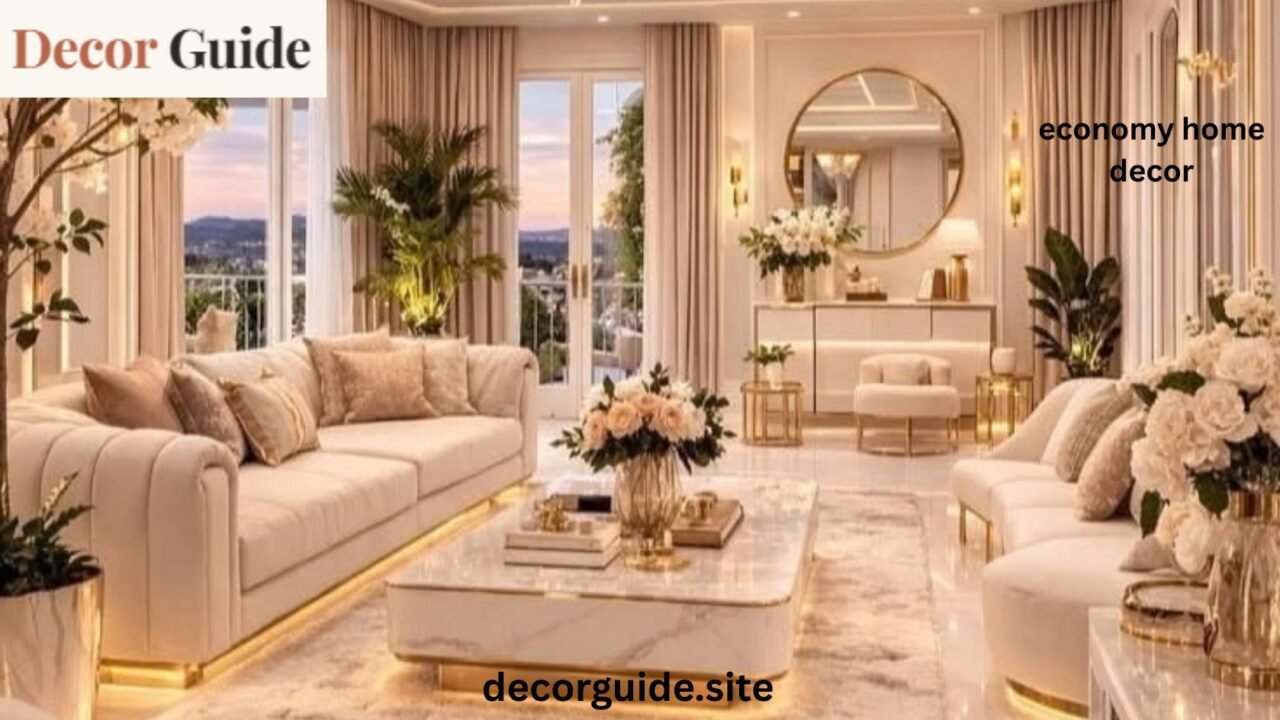
Economy home decor means creating a comfortable and attractive home without spending heavily on furniture, accessories, or major changes. The easiest approach is to work with what you already own, improve the layout, add useful details, and spend only where a change has a clear visual or practical purpose. A small budget can still produce a home that feels intentional, warm, and personal.
What Economy Home Decor Really Means
Economy home decor is not about filling a room with the cheapest things you can find. It is about making careful choices. A useful piece can solve a storage problem and improve the room at the same time. A simple color change can make old furniture feel more current. Even moving a chair or lamp can make a space feel more balanced.
The first step is to decide what is actually wrong with the room. Maybe the furniture blocks movement. Maybe the walls feel empty. Maybe the room has too many small accessories. Perhaps storage is the real problem and decoration is only making the clutter more noticeable.
Walk around the room slowly and look at it as if you are seeing it for the first time. Notice what you use every day and what simply takes up space. This simple review prevents unnecessary spending.
For economy home decor, the best starting point is usually not a shopping trip. It is a reset.
If you want to make an affordable room feel more polished, explore our guide to Luxurious Home Decor for ideas about layering, texture, lighting, and visual balance. You can adapt those design principles using the furniture and accessories you already have.
Start With What You Already Have
Before buying anything, remove items that no longer serve the room. Put decorative objects into groups and decide which ones actually belong together. A room can look more polished simply because there is less visual noise.
Try moving furniture into a different arrangement. Place the main seating where conversation feels natural. Keep walking paths clear. Move a small table closer to the place where it is actually used. If a lamp is hidden behind furniture, give it a more useful position.
Next, inspect your existing textiles. Curtains, cushions, throws, and rugs can change the mood of a room without requiring a complete redesign. If several pieces already share a similar color family, use that connection instead of introducing many new shades.
Economy home decor works especially well when existing pieces are treated as part of a complete composition. An old wooden table can look intentional beside a simple lamp and a few carefully selected accessories. A basic sofa can feel more finished when the surrounding pieces are arranged with purpose.
Do not underestimate cleaning either. Dust free shelves, clean windows, fresh textiles, and organized surfaces often make a stronger difference than another decorative purchase.
Build a Simple Color Plan
A simple color plan makes affordable decor look more coordinated. You do not need to repaint every room or replace furniture. Start by identifying the colors that already dominate the space.
Choose one main neutral, one supporting color, and a small accent color if the room needs more interest. Warm beige, cream, soft gray, muted green, natural wood, and similar calm tones can work with many home styles. The exact choice should depend on your existing furniture and natural light.
If your room already contains a strong sofa or rug, let that item guide the rest of the room. Repeating a small amount of its color in cushions, artwork, or a vase can make the space feel connected.
Economy home decor becomes easier when you stop trying to match every item perfectly. Coordinated does not mean identical. Similar tones and related textures are often enough.
Paint can also be useful when a wall genuinely needs attention. However, do not repaint simply because you want a change. If the current wall color works with your furniture and lighting, keep it and direct your budget toward a more useful improvement.
Economy Home Decor for Living Rooms
The living room usually receives the most attention, so begin with the largest visual elements. Check the sofa, chairs, rug, curtains, and main storage pieces before thinking about small decorations.
If the seating is still comfortable and structurally sound, there may be no reason to replace it. Improve the surrounding arrangement instead. Pull furniture into a balanced grouping rather than leaving everything pushed against the walls.
A simple coffee table arrangement can make a noticeable difference. Use a tray to group small objects, add one useful book or two, and include one natural element such as a plant or a simple branch arrangement. Keep enough empty surface to make the table practical.
Wall decor can also be affordable when you focus on composition rather than quantity. One larger piece can sometimes create more impact than many tiny pieces scattered across a wall.
For economy home decor, storage should also count as part of the design. Baskets, shelves, cabinets, and boxes can hide everyday clutter while contributing texture and structure to the room.
If you have been exploring more polished decorating ideas, you can also look at our guide to Luxurious Home Decor for ideas about layering, materials, and visual balance. The goal is not to copy an expensive look but to understand which details create a refined feeling and then use affordable versions where appropriate.
Decorate Bedrooms Without Overspending
A bedroom should feel calm before it feels decorated. Start with the bed because it usually occupies the largest visual area.
Keep bedding coordinated rather than crowded with many patterns. If your current bedding is plain, add interest through texture instead of buying a complete new set. A folded throw, one or two cushions, or a simple bedside arrangement may be enough.
Look at the space beside the bed. A small table, stool, or existing shelf can work as a bedside surface if it holds what you actually need. There is no rule that says every bedroom needs matching furniture.
Lighting matters too. A warm bedside lamp can make a room feel more comfortable in the evening. If you already own a suitable lamp, try changing its position before buying another one.
Economy home decor in a bedroom should support rest and organization. Avoid filling every empty surface. Keep chargers, books, clothing, and personal items under control so the room remains visually quiet.
Use Affordable Storage as Decoration
Storage is one of the easiest ways to make a home look better because clutter often creates the impression that a room needs more decoration when it actually needs better organization.
Begin with the items that appear most often. Shoes, toys, books, papers, cables, cleaning supplies, and small household objects each need a logical home.
Open storage can make useful objects easy to reach, but it requires some visual order. Closed storage hides clutter and can create a calmer appearance. Choose based on what you need to access frequently and how much visual activity the room can handle.
Baskets can work well for soft items, toys, blankets, or other objects that are difficult to stack. Boxes are useful for smaller groups of similar items. Shelves can display books and decorative objects while also providing practical storage.
For economy home decor, the important point is to buy storage only after identifying the problem. Do not buy baskets simply because they look attractive. First decide what will go inside them.
Make Small Spaces Feel Larger
Small rooms benefit from restraint. Too many decorative objects can make the space feel crowded, even when every object is attractive.
Keep the floor as clear as possible. Choose furniture that performs more than one job when your space allows it. A storage bench can provide seating and hidden storage. A narrow shelf can use vertical wall space without taking much floor area.
Mirrors can also help reflect light and create a greater sense of openness. Place one where it can reflect useful light or an attractive part of the room instead of pointing it toward a cluttered area.
Use vertical space thoughtfully. Tall shelving, wall hooks, and mounted storage can move useful items away from the floor.
Economy home decor for small spaces should focus on function first. When every item has a reason to be there, the room usually feels easier to use and easier to maintain.
Free and Low Cost Decor Changes
Some of the best decorating changes cost nothing. Rearrange furniture. Remove unnecessary objects. Group books by size or color. Move artwork from one wall to another. Change the position of a mirror. Bring a plant into a room that feels empty.
The next level is low cost improvement. Refresh a tired frame, replace a worn cushion cover, organize a shelf, or add a simple textile that works with the existing palette.
A slightly higher budget can go toward one meaningful improvement. This might be better lighting, a useful storage unit, a quality curtain, or a piece of furniture that solves a genuine problem.
Economy home decor does not require every purchase to be inexpensive. It requires spending to be intentional. One useful item can be a better decision than several decorative objects that have no clear purpose.
Common Economy Home Decor Mistakes
One common mistake is buying too many small items. A collection of inexpensive accessories can quickly make a room feel crowded.
Another mistake is choosing items only because they are cheap. Low cost does not automatically mean good value. If something breaks quickly, does not fit the room, or creates another storage problem, the purchase was not economical.
Ignoring scale is another issue. A very small decoration may disappear on a large wall, while an oversized item can dominate a compact room.
People also often change colors too quickly. If the room already has a workable palette, adding another strong color can create visual confusion.
Finally, do not decorate around clutter. Organize first, then decorate. The difference is significant.
How to Shop With a Small Decor Budget
Make a short list before shopping. Separate genuine needs from things that simply look interesting.
Start with function. Ask what the room needs to do better. If books are always scattered, look for a storage solution. If the room feels dark, examine lighting. If seating feels unfinished, consider textiles before replacing furniture.
Measure the space before buying larger items. Check how doors, drawers, and walking paths will work once the item is placed.
For economy home decor, also consider secondhand furniture, local makers, simple DIY updates, and pieces that can serve more than one purpose. An existing item may also become useful in another room.
Do not rush. Waiting can help you decide whether you actually need something. A room often becomes clearer after you live with a new arrangement for a few days.
How to Create a More Refined Look on a Budget
A refined room is usually less about expensive objects and more about consistency. Keep materials and colors related. Leave breathing room around important pieces. Repeat a texture or tone in a few locations.
Natural materials can add warmth when used thoughtfully. Wood, woven textures, cotton, linen, ceramic, and plants can create visual interest without requiring a complicated design.
Lighting is another powerful detail. Use the lamps you already have more effectively and avoid relying on one bright ceiling light for every situation. A room can feel more comfortable when light comes from more than one useful source.
Economy home decor can also look refined when you display fewer things. Choose objects that have meaning, function, or a clear visual role.
A Simple Room by Room Method
Start with the room that bothers you most. Remove obvious clutter and unnecessary decoration. Clean the surfaces and floor. Rearrange the main furniture. Review the lighting.
Next, choose a simple color direction based on what you already own. Move useful items into logical storage. Add only the decorative pieces that support the room.
Then live with the result. Notice what still feels awkward. Perhaps a lamp needs moving. Maybe a chair blocks a path. Maybe a shelf needs fewer objects.
Only after these steps should you consider buying something.
This method keeps economy home decor practical because every purchase comes after a real observation. You are not decorating for the sake of decorating. You are improving how the room looks and works.
FAQs About Economy Home Decor
What is economy home decor
Economy home decor is a practical approach to decorating with careful spending. It focuses on using existing items well, reducing clutter, improving layout, choosing useful additions, and avoiding unnecessary purchases.
Can economy home decor still look stylish
Yes. Style comes from how colors, textures, furniture, lighting, and objects work together. A room can look considered without containing expensive furniture or accessories.
What should I buy first for a low budget room
Start with the problem rather than the product. If the room has clutter, improve storage. If it feels dark, examine lighting. If it feels unfinished, review textiles and wall decor.
How can I decorate a small living room cheaply
Keep the floor open, reduce visual clutter, use vertical storage, rearrange existing furniture, and repeat a simple color palette. Add only items that improve comfort or function.
Is secondhand furniture good for economy home decor
Secondhand furniture can be useful when the piece fits the room, serves a real purpose, and is in suitable condition. Inspect it carefully before buying and consider whether it can be cleaned or updated.
How do I make cheap decor look more expensive
Use fewer pieces, coordinate colors, mix useful and decorative items, keep surfaces organized, and pay attention to lighting. Good arrangement often matters more than the price of an individual object.
Final Thoughts
Economy home decor works best when you treat your home as a space to improve rather than a collection of things to purchase. Start with layout, organization, lighting, and the items you already own. Then make small additions only when they solve a clear problem or strengthen the room.
A thoughtful room does not need to be expensive. It needs to work well, feel comfortable, and reflect the people who live there.