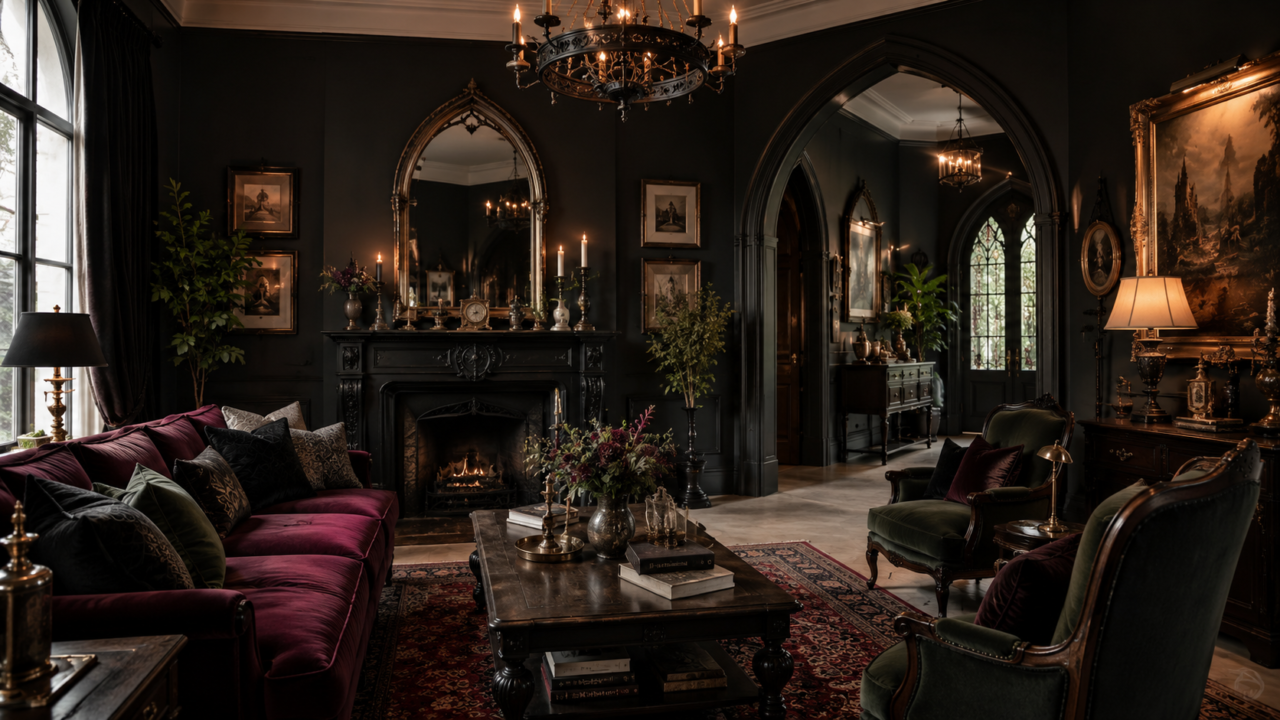
Gothic home decor is more than painting a room black and adding a few spooky decorations. When done well, it can create a home that feels dramatic, elegant, intimate, and full of personality.
The style takes inspiration from Gothic architecture, Gothic Revival furniture, historic decorative arts, rich textiles, dramatic lighting, and dark color palettes.
Modern Gothic decorating does not require you to recreate an old castle or completely redesign your home. You can introduce Gothic elements into a modern apartment, bedroom, living room, dining room, or entryway.
The key is balance. A Gothic home should feel visually dramatic while remaining comfortable, practical, and easy to live in.
What Is Gothic Home Decor?
Gothic home decor is an interior style inspired by Gothic architecture, Gothic Revival furniture, historical interiors, and dramatic decorative details.
Common elements include:
- Dark and rich colors
- Dark wood furniture
- Ornate mirrors
- Arched shapes
- Rich textiles
- Dramatic lighting
- Vintage inspired furniture
- Decorative artwork
- Patterned rugs
- Metallic accents
- Architectural details
Traditional Gothic architecture is strongly associated with pointed arches, intricate tracery, stained glass, and strong vertical forms. These ideas can be adapted into modern interiors without copying historical interiors exactly.
For example, instead of installing elaborate architectural features, you could use an arched mirror, a tall bookcase, dark wood furniture, or a dramatic light fixture.
The goal is to capture the character of Gothic design while making the room suitable for everyday life.
Key Elements of Gothic Home Decor
Several design elements work particularly well when creating a Gothic interior.
Dark Colors
Black is one of the most recognizable colors associated with Gothic interiors, but it is not the only choice.
You can also use:
- Charcoal
- Deep green
- Burgundy
- Midnight blue
- Plum
- Dark brown
- Deep gray
Using several dark shades instead of only black can give the room more depth.
Rich Textures
Texture is important because dark interiors can otherwise appear flat.
Consider combining:
- Velvet
- Woven fabrics
- Dark wood
- Leather
- Patterned rugs
- Decorative metal
- Glass
- Textured curtains
You do not need every texture in one room. Choose a few that complement each other.
Dramatic Shapes
Strong shapes can immediately introduce Gothic character.
Consider:
- Pointed arches
- Tall mirrors
- High backed chairs
- Arched bookcases
- Decorative frames
- Curved furniture
- Tall artwork
One statement piece can sometimes have more impact than many small decorations.
Choose the Right Gothic Color Palette
A successful Gothic color palette should create atmosphere without making every part of the room look identical.
Classic Gothic
Black + charcoal + dark wood + muted metallic accents
Romantic Gothic
Burgundy + cream + dark wood + soft metallic accents
Forest Gothic
Deep green + brown + charcoal + natural materials
Modern Gothic
Charcoal + black + off white + natural wood
Eclectic Gothic
Deep jewel tones + vintage patterns + dark furniture
Contrast is important.
If everything in the room is equally dark, furniture and accessories may visually blend together. Lighter fabrics, artwork, natural wood, or reflective surfaces can create separation.
If you are unsure about using a very dark wall color, test it in a smaller area before committing to the entire room.
Use Furniture to Establish the Style
Furniture can establish Gothic character more effectively than small decorative accessories.
Look for furniture with:
- Dark wood
- Carved details
- High backs
- Strong silhouettes
- Arched shapes
- Deep upholstery
- Decorative legs
- Vintage inspired forms
You do not need to buy an entire Gothic furniture set.
One statement piece can be enough.
For example, you could use a carved wooden chair in a modern living room or an ornate mirror above a simple console table.
Mixing modern furniture with Gothic inspired pieces can actually create a more sophisticated look.
Layer Lighting for a Moody but Comfortable Room
Lighting is especially important in Gothic interiors.
Dark colors and furniture can make a room feel heavy if there is not enough useful lighting.
Instead of depending on one ceiling fixture, use multiple sources of light.
Consider:
- Table lamps
- Floor lamps
- Wall sconces
- Pendant lights
- Bedside lamps
- Accent lighting
The goal is not to eliminate darkness.
The goal is to create a room that feels atmospheric while remaining comfortable enough for everyday activities.
Warm lighting can work particularly well with dark colors, wood, and rich textiles.
Add Gothic Wall Decor and Architectural Details
Walls are one of the easiest places to introduce Gothic character.
Consider:
- Ornate mirrors
- Decorative frames
- Dark botanical artwork
- Vintage inspired prints
- Tapestries
- Arched mirrors
- Patterned wallpaper
- Decorative wall panels
An arched mirror is particularly useful because it provides both decoration and a strong Gothic shape.
If your home already has interesting architectural details, use them as part of the design.
A fireplace, archway, molding, or unusual doorway can become a natural focal point.
Avoid decorating every wall.
A single strong focal point can look more intentional than many unrelated decorations.
Bring Gothic Style Into Different Rooms
Gothic Living Room
The living room gives you many opportunities to introduce Gothic style.
Start with the major furniture pieces.
A dark sofa, dark wood coffee table, patterned rug, and dramatic light fixture can establish the foundation.
Then add one or two stronger Gothic elements such as:
- Ornate mirror
- Carved side table
- Vintage inspired artwork
- Decorative lamp
- Rich colored cushions
Keep the furniture comfortable and maintain clear walking space.
Gothic Bedroom
The bedroom is naturally suited to a darker and more intimate atmosphere.
Start with the bed.
Consider:
- Dark bedding
- Upholstered headboard
- Dark wood nightstands
- Warm bedside lighting
- Rich curtains
- Decorative mirrors
- Vintage inspired artwork
Deep green, burgundy, navy, charcoal, and dark brown can all work well.
If the bedroom has limited natural light, balance the darker colors with lighter bedding or neutral accessories.
Gothic Dining Room
A dining room can handle stronger and more formal Gothic details.
Consider:
- Dark wooden dining table
- Dramatic pendant light
- Ornate mirror
- Rich colored dining chairs
- Decorative artwork
You do not need to decorate every surface.
Allow the furniture and lighting to create most of the visual impact.
Gothic Entryway
The entryway can introduce the Gothic style before someone enters the rest of the home.
Try:
- Ornate mirror
- Dark console table
- Decorative lamp
- Dark runner
- Vintage inspired artwork
However, keep the entryway functional.
Keys, shoes, bags, and other everyday items should still have a practical place.
How to Make Gothic Decor Work in a Small Space
Gothic decor can work in small rooms, but the design needs to be selective.
Instead of using many small decorations, choose a few pieces with strong visual impact.
An arched mirror can be particularly useful because it introduces a Gothic shape while also reflecting light.
Vertical elements can also help emphasize the height of the room.
Consider:
- Tall bookcases
- High backed chairs
- Tall lamps
- Long curtains
- Vertical artwork
- Narrow cabinets
Avoid filling every available surface.
A small room usually benefits from visual breathing space.
Modern Gothic vs. Traditional Gothic Decor
Modern Gothic does not have to look like a historical Gothic interior.
| Traditional Gothic | Modern Gothic |
|---|---|
| Strong historical influence | Selected historical influences |
| Ornate furniture | Mix of ornate and modern furniture |
| Dark wood throughout | Dark wood mixed with modern pieces |
| Elaborate patterns | Controlled patterns |
| Formal appearance | Relaxed appearance |
| Heavy decoration | Fewer statement pieces |
Modern Gothic gives you more flexibility.
You can combine a contemporary sofa with an ornate mirror or a modern dining table with traditional-looking chairs.
The result can feel dramatic without looking like a historical reproduction.
Common Gothic Decorating Mistakes
Making Everything Black
Black is effective, but using it everywhere can make the room visually flat.
Use different dark colors and introduce lighter elements for contrast.
Making the Room Look Like Halloween
Gothic decor is not the same as Halloween decor.
You can use darker or mysterious decorative elements, but the overall design should also rely on furniture, lighting, architecture, colors, and textures.
Using Too Many Decorations
Adding more Gothic objects does not necessarily make the room better.
Build the design in stages:
- Color
- Furniture
- Lighting
- Textiles
- Wall decor
- Accessories
Ignoring Function
A room still needs to work for everyday life.
Furniture should be comfortable, storage should be accessible, and walking areas should remain clear.
How to Create Gothic Home Decor on a Budget
You do not need to replace your entire room.
Start with items you already own.
Look for:
- Dark wood furniture
- Old frames
- Decorative mirrors
- Lamps
- Patterned blankets
- Artwork
- Dark colored accessories
No Cost Changes
- Rearrange furniture
- Remove unrelated decorations
- Create a stronger focal point
- Move existing dark furniture
- Reorganize artwork
Low Cost Changes
- Cushions
- Throws
- Artwork
- Frames
- Lampshades
- Small accessories
Moderate Investment
- Large mirror
- Statement lighting
- Rug
- Wallpaper
- One distinctive furniture piece
Higher Investment
- Built in shelving
- Custom cabinetry
- Decorative wall paneling
- Architectural features
- Major furniture replacements
The important thing is to determine what the room actually needs before buying anything.
How to Keep a Gothic Home Comfortable and Livable
Gothic style should not come at the expense of comfort.
Make sure frequently used items remain accessible and that furniture does not interfere with movement around the room.
You can soften a dark interior with:
- Comfortable cushions
- Soft rugs
- Warm lighting
- Natural materials
- Neutral accents
- Plants
- Lighter textiles
The contrast between dramatic Gothic elements and comfortable everyday materials can create a much more welcoming interior.
Think of Gothic style as a framework rather than a strict set of rules.
Choose the elements that fit your home, personality, and budget.
Final Thoughts
Gothic home decor works best when it is treated as a design style rather than a theme.
Start with your color palette, then introduce furniture with strong shapes, layered lighting, rich textures, artwork, mirrors, and selected architectural details.
You do not need to make every wall black or fill every room with ornate furniture.
A single arched mirror, dark wood cabinet, dramatic light fixture, rich rug, or carved chair can introduce Gothic character without overwhelming the room.
The strongest Gothic interiors balance drama, comfort, and practicality. That balance allows you to create a home that feels distinctive and elegant while still working for everyday life.
FAQ
What is Gothic home decor?
Gothic home decor is an interior style influenced by Gothic architecture, Gothic Revival furniture, historical decorative arts, dark colors, rich textures, and dramatic shapes.
Does Gothic home decor have to be black?
No. Deep green, burgundy, navy, charcoal, brown, and plum can also create a Gothic atmosphere.
How can I make my home Gothic without making it look scary?
Focus on dark colors, furniture, lighting, mirrors, artwork, textures, and architectural details instead of relying heavily on Halloween decorations.
Can Gothic decor work in a small room?
Yes. Use fewer but stronger pieces, such as an arched mirror, tall furniture, dramatic lighting, and a controlled color palette.
What furniture works with Gothic home decor?
Dark wood furniture, carved pieces, high backed chairs, dramatic sofas, vintage inspired tables, and furniture with curved or pointed details can work well.
How do I make a Gothic bedroom cozy?
Use comfortable bedding, layered textiles, warm lighting, soft rugs, and a balanced dark color palette.
Can modern furniture work with Gothic decor?
Yes. Modern furniture can be combined with one or two ornate Gothic inspired pieces to create a contemporary Gothic interior.
What is the difference between Gothic and Whimsigoth decor?
Gothic decor generally focuses on dark, dramatic, ornate, and historically inspired elements, while Whimsigoth tends to be more eclectic and can combine Gothic influences with vintage, bohemian, celestial, and playful elements.