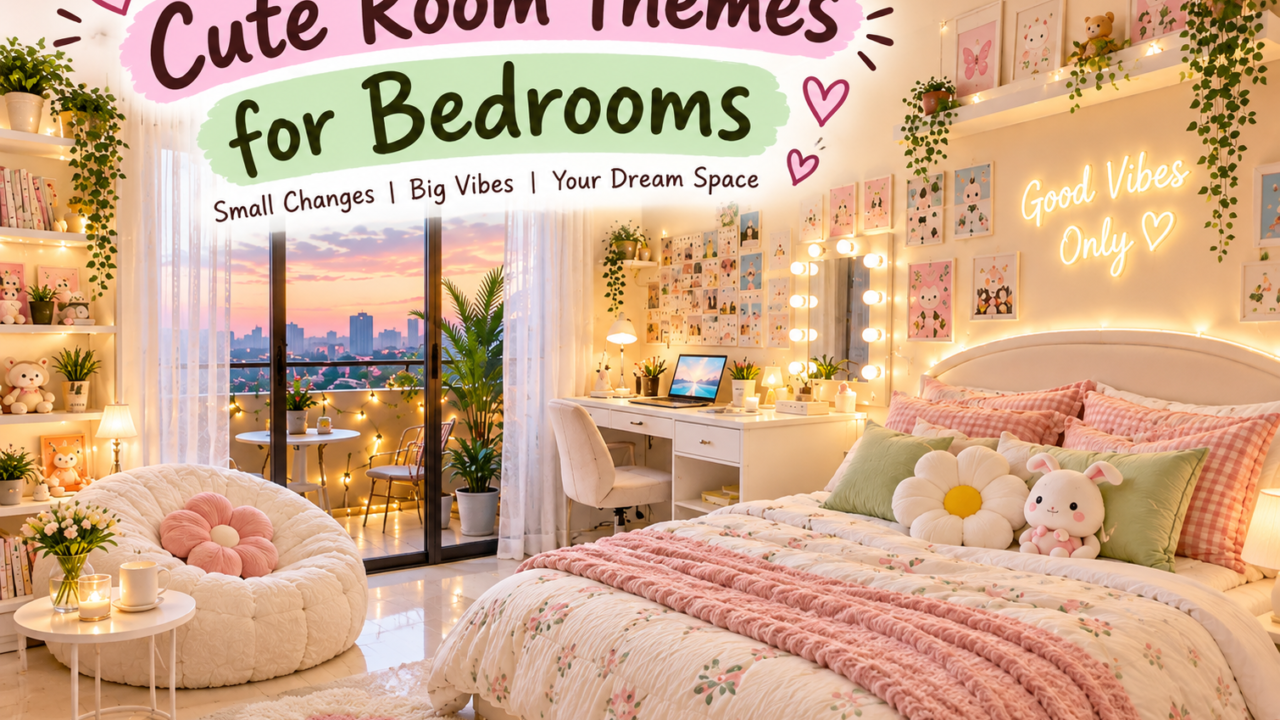
Choosing a cute room theme starts with deciding how you want the room to feel. You can create a soft, cozy look with pastel colors, a playful space with colorful decor, or a clean and simple room with neutral tones. The key is to choose one main style, repeat a few colors and patterns, and avoid filling every empty space with decorations. From cozy cottage inspired rooms to pink, nature, minimalist, and dreamy themes, there are plenty of ways to make a bedroom feel personal without spending a lot.
How to Choose the Right Cute Room Theme for bedroom
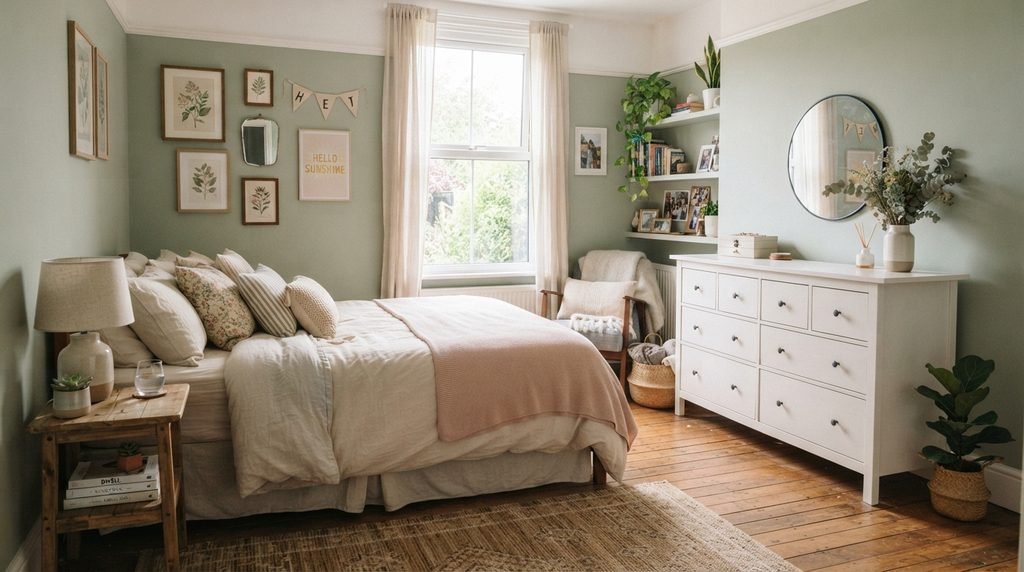
Before buying anything, look at the room you already have.
Consider four things:
- Your preferred colors
- The size and layout of the room
- The things you actually need to store
- The atmosphere you want to create
A theme should work with your room rather than fight against it.
For example, a small bedroom may look better with a simple pastel theme than with several large pieces of furniture and dozens of decorations. A larger bedroom gives you more freedom to use seating, wall art, shelving, plants, or a larger feature wall.
Start With One Main Color
Choose one main color and then add one or two supporting colors.
Some combinations include:
- Soft pink, cream, and white
- Sage green, beige, and warm white
- Lavender, white, and light gray
- Baby blue, cream, and natural wood
- Peach, white, and beige
- Black, white, and muted pink
The goal is not to make everything the same color. Repeating a color in small details can make the room feel connected.
Decide What You Want to Keep
A cute room still needs to function as a bedroom.
Before decorating, identify:
- Clothes
- Shoes
- Books
- School or work supplies
- Beauty items
- Electronics
- Bedding
- Bags
- Personal collections
Once you know what needs a home, you can choose storage that supports the theme.
21 Cute Room Themes to Try
1. Soft Pink Theme
Pink is an easy starting point if you want a sweet and playful bedroom.
You do not need to make every surface pink. Instead, use pink through bedding, cushions, artwork, curtains, or small decorative pieces.
Pair soft pink with white, cream, or light wood to keep the room balanced.
Best for: A soft, feminine, cheerful look.
Budget idea: Change the bedding or add a few small pink accessories instead of replacing furniture.
2. Pastel Rainbow Theme
A pastel rainbow room uses several soft colors without becoming visually overwhelming.
Think lavender, pale pink, baby blue, soft yellow, and mint. Keep larger pieces neutral and introduce the colors through smaller decorations.
A pastel rainbow theme works particularly well when you want the room to feel playful but still organized.
Small space tip: Keep the walls and large furniture simple and use pastel colors mainly in removable accessories.
3. Cozy Cottage Theme
A cottage inspired bedroom can feel warm, relaxed, and charming.
Use:
- Floral or subtle patterned bedding
- Soft fabrics
- Natural looking materials
- Simple artwork
- Warm neutral colors
- Small decorative objects
Avoid combining too many patterns. Choose one noticeable pattern and keep the rest quieter.
Best for: People who want a warm and homey bedroom.
4. Cute Minimalist Theme
A minimalist room can still be cute.
Start with a simple color palette and keep only decorations that you genuinely like. Instead of covering the walls, choose a few pieces that have a clear purpose or visual connection.
Storage is especially important here because clutter can quickly change the appearance of the room.
Good approach: Keep everyday items organized and leave some open space around furniture.
5. Nature Inspired Theme
Bring a little outdoor feeling indoors with green tones, botanical artwork, natural textures, and plants if they suit your space.
You can use real plants, artificial greenery, botanical prints, or simply a green and neutral color palette.
For a small bedroom, wall mounted decorations can add personality without taking up floor space.
6. Lavender Dream Theme
Lavender creates a soft and calming visual style.
Combine lavender with white, cream, or light gray. Use the color in bedding, cushions, curtains, wall art, or smaller accessories.
If the room is already colorful, use lavender as an accent rather than adding another strong color throughout the room.
7. Cloud and Sky Theme
A cloud inspired bedroom can create a dreamy atmosphere.
Use soft blue, white, and light gray. Cloud artwork, sky themed prints, and simple lighting can reinforce the theme without requiring major changes.
Keep the furniture neutral so the decorative elements remain the focus.
8. Fairy Light Cozy Theme
Sometimes the theme comes more from lighting than from furniture.
Warm decorative lights can make a bedroom feel cozy, especially in the evening. Combine them with soft bedding, cushions, blankets, and simple wall decor.
Do not rely on decorative lighting as the only light source. The room should still have practical lighting for reading, dressing, or working.
9. Cute Boho Theme
A soft boho bedroom can combine warm neutrals, natural textures, simple patterns, and decorative wall pieces.
Try:
- Beige and cream
- Natural wood
- Woven textures
- Simple patterned textiles
- Green accents
The important part is editing. Too many baskets, patterns, plants, and wall decorations can make a small room feel crowded.
10. Kawaii Inspired Theme
A cute Japanese pop inspired room can use playful colors, character inspired accessories, rounded shapes, and cheerful artwork.
The easiest way to create this look is to keep the basic room neutral and let the smaller decorative pieces provide personality.
This also makes the room easier to update later if your tastes change.
11. Strawberry Theme
For something playful, build the room around strawberry inspired colors and patterns.
Red and pink can be balanced with white or cream. You might use strawberry artwork, patterned bedding, small decorative objects, or a themed cushion.
Instead of putting strawberries on everything, choose a few repeated details so the theme feels intentional.
12. Flower Theme
A floral bedroom can range from subtle to highly decorative.
For a softer appearance, use one floral pattern on the bedding or curtains and keep the rest of the room simple.
You can also use botanical artwork if you want the idea of flowers without covering the room in floral prints.
13. Pink and White Theme
Pink and white are easy to combine because white gives the room visual breathing space.
Use white for larger surfaces and furniture where possible, then introduce pink through:
- Bedding
- Cushions
- Artwork
- Curtains
- Small storage pieces
This approach works especially well in smaller rooms because the lighter base keeps the space visually simple.
14. Blue and White Theme
Blue and white can create a fresh and clean looking bedroom.
Choose a soft blue rather than combining many different shades. Add texture through blankets, cushions, curtains, or bedding.
Natural wood can also work well with this combination if you want to make the room feel warmer.
15. Cute Retro Theme
A retro inspired bedroom can use playful colors, vintage looking artwork, rounded shapes, and carefully selected decorative pieces.
The trick is to choose a particular color direction rather than mixing every retro element you find.
Use one or two noticeable statement pieces and keep the rest of the room relatively simple.
16. Reading Nook Theme
If you love books, make reading part of the room’s design.
A comfortable chair, floor cushion, bedside reading area, or organized bookshelf can become the central feature.
Think about storage before adding a large bookcase. If you have a small room, vertical shelving may use the available wall space more efficiently than additional floor furniture.
17. Art Lover Theme
Turn your walls into the main decorative feature.
You can display:
- Prints
- Drawings
- Posters
- Photography
- Personal artwork
- Small collections
Use a consistent color connection between the pieces so the wall looks like a collection rather than a random group of images.
Leave enough empty wall space to prevent the display from becoming overwhelming.
18. Cozy Neutral Theme
Cute does not have to mean colorful.
Cream, beige, warm white, light brown, and soft gray can create a comfortable bedroom when combined with interesting textures.
Layer the look with bedding, cushions, blankets, rugs, and simple artwork.
This is a useful option if you want a theme that can easily adapt when your preferences change.
19. Soft Green Theme
Soft green can give a bedroom a fresh and natural appearance.
Pair it with:
- Cream
- White
- Beige
- Natural wood
Use green as the main accent and repeat it in a few places around the room.
This creates consistency without requiring every item to match.
20. Celestial Theme
Stars, moons, clouds, and dark blue tones can create a dreamy celestial bedroom.
Use the theme carefully. A few star or moon decorations can establish the idea without making the room look like a costume set.
For a more mature look, combine dark blue with cream, gray, or muted metallic looking accents.
21. Personalized Memory Theme
One of the most meaningful cute room themes can be based on your own memories and interests.
Display selected:
- Photos
- Artwork
- Travel memories
- Favorite books
- Small collections
- Handmade decorations
The key word is selected. Keep the display organized instead of putting every meaningful item in one area.
How to Build Your Theme Step by Step
Once you choose a theme, build the room in layers.
Step 1: Declutter First
Do not decorate around clutter.
Remove things you no longer use and identify items that belong somewhere else. This gives you a clearer view of the actual room.
Step 2: Choose the Color Palette
Pick one main color and one or two supporting colors.
Write the colors down before shopping. This simple step can stop you from buying unrelated decorations.
Step 3: Start With the Largest Visual Element
Your bed usually has a major visual impact, so bedding can be an easy place to establish the theme.
Other large elements may include curtains, a rug, wall color, or a desk.
Step 4: Add Wall Decor
After the major elements are in place, consider the walls.
Use artwork, prints, mirrors, shelves, or other decorations that support the theme.
Do not feel that every wall needs something.
Step 5: Add Soft Textures
Blankets, cushions, bedding, curtains, and rugs can make a room feel more comfortable without changing the structure of the space.
Choose textures that work with your color palette.
Step 6: Organize Everyday Items
Now solve the practical side of the room.
Put clothes, books, accessories, cables, and other daily items into appropriate storage.
This is where you should think about open versus closed storage.
Open storage makes frequently used items easy to reach and can display attractive belongings, but it can look messy quickly.
Closed storage hides visual clutter and can make a room look cleaner, but you need to open doors or drawers whenever you need something.
For a cute bedroom, a mixture can work well: display a few attractive items while keeping less attractive everyday clutter behind doors or inside drawers.
Step 7: Add Small Decorative Details
Only after the main elements are finished should you add smaller decorations.
Examples include:
- Small artwork
- Decorative cushions
- Trinket dishes
- Small plants
- Photo frames
- Desk accessories
Step back after adding each group. If the room already feels complete, stop.
Cute Room Ideas on Different Budgets
You do not need a complete room makeover to create a new theme.
Free
Start with what you already own.
Try:
- Rearranging furniture
- Removing unnecessary decorations
- Reorganizing shelves
- Changing which artwork is displayed
- Creating a cleaner desk
- Folding and arranging blankets neatly
- Moving existing plants or accessories
Sometimes removing items creates more visual change than adding them.
Low Budget
Focus on small changes with a noticeable effect.
You could update:
- Pillow covers
- Bedding
- Wall prints
- Small organizers
- Decorative containers
- Desk accessories
Choose items that fit your existing color palette rather than buying several unrelated pieces.
Medium Budget
Once the small changes are complete, consider one larger update.
For example:
- A new rug
- Curtains
- A larger wall art arrangement
- Better storage
- A new bedside table
- Updated lighting
Choose the item that solves the biggest problem in your room.
Higher Budget
A larger budget gives you more options, such as changing furniture, repainting, improving storage, or updating several major elements.
Still, start with the room’s layout and storage needs before buying anything.
A beautiful room can become frustrating if there is nowhere to put everyday belongings.
Small Space Tips for Cute Bedrooms
Small rooms need editing more than decoration.
Use Vertical Space
Walls can hold shelves, artwork, hooks, or other useful storage.
This can reduce the need for additional floor furniture.
Keep the Floor Clear
An open floor area can make a small bedroom feel easier to move around.
Avoid adding furniture simply because an empty corner exists.
Choose Dual Purpose Items
When possible, look for furniture that solves more than one problem.
For example, a piece of furniture can provide both useful storage and a surface for displaying a few decorative items.
Use a Limited Decorative Palette
Small rooms can become visually busy very quickly.
Choose fewer colors and repeat them consistently.
Hide Everyday Clutter
If open shelves are becoming messy, move less attractive everyday items into drawers, boxes, baskets, or cabinets.
The goal is not to hide everything. It is to give each type of item an appropriate home.
Common Mistakes to Avoid
Choosing Too Many Themes
A bedroom can contain several influences, but it should have one clear visual direction.
Mixing cottage, celestial, rainbow, boho, and retro elements without a connection can make the room look random.
Buying Decor Before Measuring the Space
Do not buy furniture or large storage pieces simply because they look cute online.
Check where the item will go and whether it interferes with doors, windows, walking paths, or existing furniture.
Matching Everything Exactly
A room does not need identical colors and patterns everywhere.
Some variation makes the space feel more natural.
Ignoring Storage
Decorating without solving clutter problems creates a room that looks good briefly but becomes difficult to maintain.
Decide what needs to be stored before choosing storage products.
Covering Every Wall
Empty space is useful.
It gives the eye somewhere to rest and allows your favorite decorations to stand out.
Following Trends Too Closely
A trendy room can stop feeling personal if every choice comes from the same trend.
Use trends as inspiration, then adapt them to your own preferences.
How to Keep a Cute Room Organized
A theme is easier to maintain when everything has a home.
Use a simple organization system:
Daily items: Keep them within easy reach.
Occasional items: Store them in drawers, cabinets, or higher shelves.
Decorative items: Display only the pieces you want people to notice.
Unused items: Donate, recycle, discard, or relocate them as appropriate.
Do a quick reset regularly. Put clothes away, clear the desk, return books to their place, and remove items that have collected on surfaces.
The less clutter you allow to build up, the easier it is to maintain the room’s appearance.
How to Make a Cute Room Feel More Personal
The best theme is one that reflects the person using the room.
Instead of copying a complete bedroom from a photo, identify the elements you actually like.
Maybe you like the color palette but not the furniture. Perhaps you like the lighting but prefer minimalist walls. You might like floral bedding but want neutral furniture.
Take those individual ideas and combine them into a room that fits your space.
A cute bedroom does not have to look perfect. It needs to be comfortable, organized, and visually connected.
Final Thoughts
The easiest way to create a cute bedroom is to build the theme gradually. Start by decluttering, choose a simple color palette, establish the look with larger elements such as bedding or curtains, then add wall decor and smaller accessories.
If your room is small, prioritize clear floors, vertical storage, and fewer decorative pieces. If your budget is limited, rearranging and reorganizing what you already own can be the first step.
Whether you prefer pink, pastel, floral, nature inspired, minimalist, celestial, or cozy neutral styles, the same basic method works: choose a direction, organize what you own, and add decoration with purpose.
FAQs
What is the easiest cute room theme to create?
A soft pink, pastel, neutral, or nature inspired theme is relatively easy to build because you can establish the look through color and a few accessories without changing major furniture.
How can I make a cute room without painting?
Use bedding, curtains, artwork, cushions, rugs, lighting, and small accessories to introduce your chosen colors. This is also useful for renters who cannot make permanent changes.
Can a small bedroom have a cute theme?
Yes. Keep the palette simple, use vertical space, avoid oversized decorations, and prioritize storage. A small room often looks better when decoration is carefully edited.
How do I choose decorations that will not look childish?
Choose a simple color palette, limit character based decorations, and combine playful pieces with neutral furniture and textures. This keeps the room cute while allowing it to feel more mature.
Should my bedding match my room theme?
It does not need to match perfectly. However, bedding is often one of the largest visual elements, so choosing colors or patterns that support the theme can make the room feel more cohesive.
How often should I change my room theme?
There is no fixed schedule. Instead of replacing everything, update smaller elements such as artwork, bedding, cushions, or accessories when your preferences change.