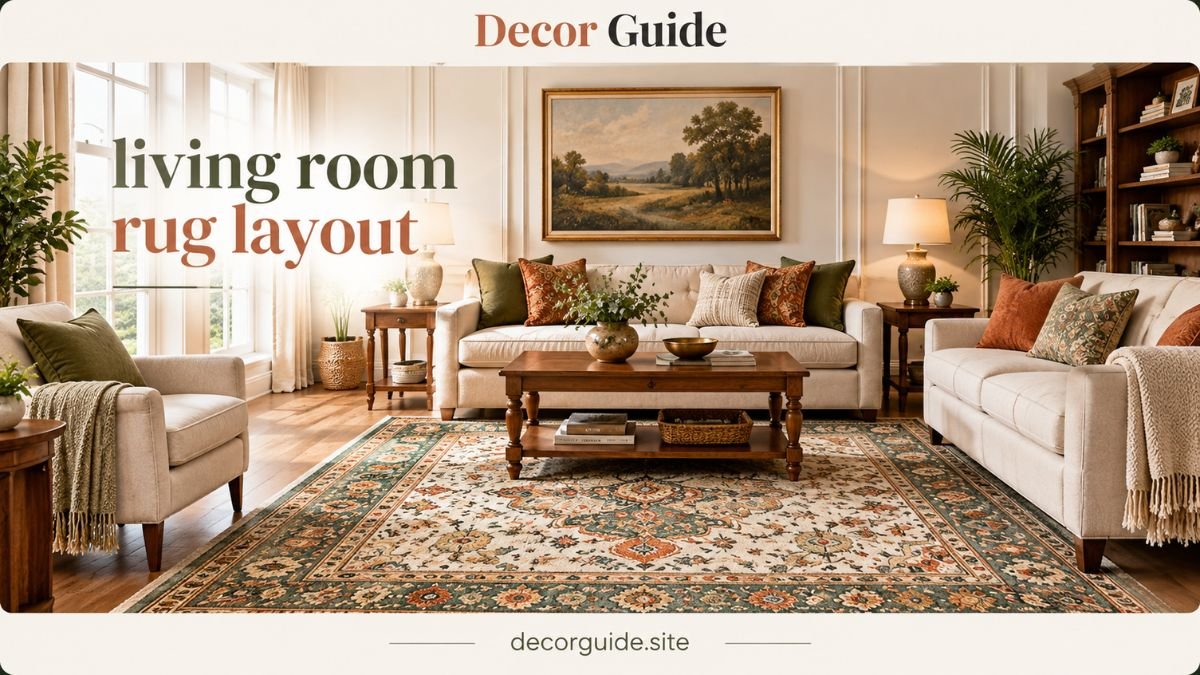
A good living room rug layout makes furniture feel connected, defines the seating area, and helps the entire room look more organized. In most living rooms, the easiest approach is to place the rug beneath the front legs of the sofa and chairs, allowing the seating to form one cohesive arrangement. Larger rooms may benefit from a rug that holds all the main furniture legs, while smaller rooms can work well with a rug positioned beneath the central seating area.
The right layout depends on your furniture, room dimensions, walking paths, and the look you want to achieve. A rug should support how you use the room, not simply fill an empty patch of floor. With a few careful measurements and some rearranging, you can make the space feel more comfortable without replacing your existing furniture.
Why Living Room Rug Layout Matters
A rug does more than soften the floor. It helps establish where one area of the room begins and ends, particularly when several furniture pieces share the same space.
Without a clear arrangement, a sofa, armchair, and coffee table can look like separate objects scattered around the room. A well placed rug visually connects them and gives the seating area a defined center.
Rugs also introduce color, pattern, and texture. A neutral rug can soften a room with dark furniture, while a patterned design can bring character to a simple arrangement. The layout determines how these details relate to the rest of the room.
Create a Connected Seating Area
Think of the sofa, chairs, and coffee table as one group rather than individual pieces. The rug should help connect these items visually.
For many living rooms, placing the front legs of the sofa and accent chairs on the rug creates a balanced arrangement. The coffee table sits within the same area, giving the furniture a clear relationship.
In a more spacious room, a larger rug can accommodate all the main seating furniture. This creates a more generous appearance, especially when the furniture is arranged around a central focal point.
Define Open Plan Living Spaces
Open plan homes often combine a living area, dining space, and kitchen without walls separating them. A rug can help establish the living room zone while leaving the surrounding floor visible.
Position the rug beneath the main seating group and align the furniture toward a shared focal point, such as a television, fireplace, or window. The dining area can have its own arrangement, provided the two zones remain easy to move between.
The rug does not need to match every other textile in the home. Instead, choose colors or textures that relate to the wider interior without making each area look identical.
Choose the Right Rug Size Before Arranging Furniture
Rug size is one of the biggest factors in a successful living room arrangement. A rug that is too small can make a spacious seating group look disconnected. A rug that is too large may cover more floor than you want or interfere with nearby furniture.
Start by measuring the seating area rather than choosing a rug based only on the overall room dimensions.
Measure the Main Furniture Group
Measure the width of the sofa and note how far the armchairs or other seating pieces extend into the room. Include the coffee table and consider the distance between the furniture and nearby walls.
Use masking tape to mark the proposed rug edges on the floor. This makes it easier to judge the size before purchasing anything.
Walk around the taped area and check whether doors can open freely, pathways remain clear, and the rug will sit comfortably within the furniture arrangement.
Decide How Much Furniture Should Sit on the Rug
There are three common approaches to living room rug placement.
The first places all the main furniture legs on the rug. This usually works well in larger rooms where the rug can accommodate the entire seating arrangement.
The second places only the front legs of the sofa and chairs on the rug. This is a flexible option for many medium sized living rooms because it connects the furniture without requiring an especially large rug.
The third places the rug mainly beneath the coffee table, leaving the seating furniture outside its edges. This can work in compact spaces, but the rug needs to be large enough to look intentional rather than like a small mat floating in the middle.
Choose the approach that suits your floor space and furniture dimensions. There is no need to follow a single rule if another arrangement looks better and works more comfortably.
Living Room Rug Layout With Different Furniture Arrangements
The best layout depends on the shape and position of your furniture. A sofa facing a television requires a different arrangement from two sofas positioned opposite each other.
Consider how people sit, talk, watch television, and move through the room before deciding where the rug should go.
Sofa and Coffee Table Layout
This is one of the simplest arrangements. Place the rug beneath the front legs of the sofa and position the coffee table near the center of the seating area.
The table should be easy to reach from the sofa without blocking movement. If the rug has a strong pattern, center the furniture carefully so the pattern looks balanced within the arrangement.
A rectangular rug often suits a straight sofa and rectangular coffee table. A round table can introduce a softer shape, especially when the room contains many straight lines.
Sectional Sofa Rug Layout
A sectional sofa creates a larger seating footprint, so the rug needs to relate to both sections of the furniture.
Place the rug beneath the front legs of the sectional when possible. Make sure it extends into the open area in front of the sofa rather than appearing tucked into one corner.
For a larger room, a more generous rug can sit beneath the main seating area. In a smaller space, measure the distance between the sectional and nearby walls before choosing a rug that may leave too little visible flooring.
If the sectional has a chaise, check that the rug arrangement looks balanced from the entrance to the room as well as from the main seating position.
Two Sofas or Multiple Chairs
When two sofas face each other, a rug can create a clear central zone for conversation. Position the coffee table between the sofas and place the rug beneath the front legs of both pieces.
With several armchairs, arrange the seating around the coffee table or focal point first. Then position the rug to connect the chairs rather than simply centering it on the room.
Leave enough space for people to enter and leave the seating area comfortably. A symmetrical arrangement can feel formal, while slightly varied chair positions may create a more relaxed atmosphere.
How to Position a Rug in a Small Living Room
Small living rooms need careful planning because every furniture item affects the available floor space. The goal is to make the seating area feel connected while preserving clear pathways.
A rug can help a compact room feel more organized, but choosing one that is too small may make the furniture look crowded.
Use the Rug to Unite the Furniture
In many small rooms, a rug that extends beneath the front legs of the sofa and nearby chairs is a practical starting point. It brings the seating together without requiring every furniture leg to fit on the rug.
Try not to place each furniture item on a separate small rug. Multiple floor coverings can break up the space visually and make the arrangement harder to follow.
If the room has an unusual shape, mark out the rug dimensions with tape and test the arrangement before purchasing.
Keep Walkways Clear
A rug should not obstruct doors or create awkward transitions between the living room and adjoining spaces. Pay attention to the routes people use most often.
If a doorway opens toward the seating area, make sure the rug does not interfere with the door or bunch up where people walk.
Furniture does not need to sit against every wall. Sometimes a more compact seating group with a clear path around it feels better than spreading everything along the perimeter.
Choose a Pattern That Suits the Room
A simple pattern can help the rug complement a small space without competing with the furniture. Subtle stripes, understated geometric designs, or muted colors can work well with a range of interiors.
A bold pattern can also look attractive in a compact room. The key is to balance it with the other colors and patterns already present.
If the sofa has a strong print, a quieter rug may create a more relaxed appearance. If the furniture is plain, the rug can provide the main decorative feature.
Match Your Rug Layout to the Room Shape
Room shape affects how a rug should be positioned. The most effective layout usually follows the furniture arrangement and the natural flow of the space.
Rectangular Living Rooms
A rectangular rug often works naturally in a rectangular room. Position it in relation to the sofa and coffee table, keeping the seating group visually centered within the available area.
If the sofa sits along a long wall, the rug can run parallel to it. However, the furniture arrangement matters more than matching the room shape perfectly.
Avoid placing the rug so far away from the seating that it looks like a separate island.
Square Living Rooms
A square room may suit a centered seating group with a rug beneath the main furniture. A square rug can reinforce that geometry, while a rectangular rug can create a different visual direction.
If the room contains a large sectional, position the rug to balance the open area in front of it. Check the arrangement from several angles rather than judging it from the sofa alone.
Narrow or Awkward Rooms
In a narrow room, consider how the rug relates to the main walkway. A rectangular rug can help establish a continuous seating zone, but it should not create a visual obstacle at the entrance.
For an awkwardly shaped room, start with the furniture and then fit the rug around the arrangement. It is usually easier to position a rug around a functional seating group than to force furniture into a layout designed around the rug.
Coordinate Rug Colors With Your Living Room Furniture
Once the layout is established, consider how the rug color relates to the sofa, flooring, walls, and other furnishings.
A rug does not need to match everything. It should contribute to the overall palette and help the furniture feel connected.
Light Rugs With Dark Furniture
A light beige, cream, or soft gray rug can create contrast beneath a dark sofa or wooden coffee table. This helps the seating area stand out without requiring additional decorative pieces.
Consider maintenance before choosing a pale rug. In a busy household, a material and color that can tolerate regular use may be more practical than a delicate surface that requires constant attention.
Dark Rugs With Light Furniture
A deeper rug can anchor pale furniture and introduce a stronger visual center. Brown, charcoal, muted green, and other rich tones may suit rooms with light walls and natural wood.
Check how the rug looks in daylight and under evening lighting. Dark surfaces can appear more prominent in a room with limited natural light.
Patterned Rugs and Neutral Furniture
If your sofa and chairs are relatively plain, a patterned rug can add personality. Choose a design that includes one or two colors already present in the room so the result feels connected.
If several cushions, curtains, and accessories already have strong patterns, a quieter rug may be the better choice.
The objective is balance, not matching every item.
Combine Rustic Furniture With the Right Rug Layout
Natural wood, textured upholstery, and relaxed furniture shapes often work beautifully with rugs that add softness and warmth. If your living room includes rustic pieces, choose a rug that complements their character without making the entire space feel heavy.
For more ideas on choosing and arranging natural wood pieces, explore Rustic Living Room Furniture. The article can help you consider how wooden tables, comfortable seating, and natural finishes work together within a welcoming living room.
Choose Texture to Balance Wood Furniture
Rustic furniture often has visible grain, substantial shapes, or weathered finishes. A woven rug, a subtle pattern, or a soft neutral surface can balance these details.
If the wood is dark and the room feels visually heavy, a lighter rug can introduce contrast. If the furniture is pale, a warmer or deeper rug can give the seating area more definition.
Keep the Arrangement Practical
A rustic coffee table may have thick legs or a solid frame. Make sure the rug lies flat beneath it and that chairs can move without catching on the edges.
A rug pad can help reduce slipping and bunching, provided it is suitable for the floor surface and rug type.
Think about cleaning as well. A rug placed under frequently used seating will collect everyday dust and crumbs, so choose a material that suits the household.
Common Living Room Rug Layout Mistakes
A rug can be attractive on its own and still look wrong in the room. Most layout problems come from poor scale, unclear furniture placement, or a lack of attention to movement.
Choosing a Rug That Is Too Small
A small rug beneath only the coffee table may leave the sofa and chairs visually disconnected. If this is the look you prefer, make sure the rug is large enough to hold the table comfortably and relates to the seating group.
Whenever possible, test a larger size with tape before buying. The difference in coverage can be easier to judge on the floor than in a product photograph.
Placing the Rug Too Far From the Sofa
A large gap between the rug and the seating can make the arrangement appear unfinished. Bring the rug closer so the furniture and central table form one connected zone.
The exact position depends on the size and shape of the pieces. Aim for a layout that looks balanced from the main entrance and feels comfortable when seated.
Ignoring Doorways and Walkways
A rug that catches beneath a door or curls up along a busy path can become frustrating and potentially unsafe.
Check door clearance, rug edges, and transitions to hard flooring before finalizing the position. Use an appropriate rug pad where needed and address any edges that will not lie flat.
Making Every Furniture Piece Match
The rug does not need to repeat the exact color of the sofa or curtains. Too much matching can make the room feel flat.
Instead, look for complementary colors, related textures, and a balanced mix of light and dark surfaces.
Affordable Ways to Improve Your Living Room Rug Layout
You do not need to purchase a new rug immediately. Sometimes a simple rearrangement makes the existing one look much better.
Rearrange What You Already Own
Move the rug closer to the sofa, align it with the coffee table, and check whether the front legs of the seating can rest on it. Remove unnecessary furniture from the seating area if it blocks movement.
Try more than one arrangement before settling on a final position. Take a photograph from the doorway to see whether the rug looks balanced in the full room.
Shop Carefully for a Replacement
If the existing rug is too small or damaged, compare options based on dimensions, material, maintenance, and suitability for your flooring.
Secondhand rugs can be worth considering, but inspect them for odors, stains, damage, and signs of pests. Check cleaning requirements before bringing one into your home.
Do not buy a rug solely because it looks attractive online. Its size and placement will determine whether it works in your room.
Invest in the Right Size and Rug Pad
If you decide to spend more, prioritize a rug that fits the furniture arrangement and suits your household needs. A suitable rug pad may also improve stability and help the rug remain in place.
Compare the full cost, including any pad, delivery, and cleaning requirements. A more expensive rug is not automatically the right choice if it does not fit the space.
Frequently Asked Questions
Should a living room rug go under the sofa?
In many living rooms, placing the front legs of the sofa on the rug creates a connected seating area. Larger rooms may accommodate all the sofa legs, while some compact layouts work with the rug positioned mainly beneath the coffee table.
Should all furniture legs be on the rug?
No. All legs on the rug can create a unified look in a spacious room, but front legs on the rug are often more practical. Choose the arrangement that suits the size of your furniture and available floor space.
Should a living room rug be centered under the coffee table?
The rug should generally relate to the entire seating arrangement rather than the coffee table alone. Centering it beneath the table can work, but check how it aligns with the sofa and chairs as well.
Can a living room rug be placed at an angle?
Yes, if the angle supports the room layout. An angled rug can work in an unusual space or an informal seating arrangement, but it may look distracting when the rest of the furniture follows straight lines.
What shape rug is best for a living room?
Rectangular rugs suit many sofa arrangements, while round rugs can soften a room with angular furniture. Square rugs can work well in more balanced layouts. Choose a shape that fits the furniture group and preserves clear walkways.
How can I keep a living room rug from moving?
Use a rug pad designed for your flooring and rug type. Keep the floor clean and dry as directed by the flooring manufacturer, and check the rug edges regularly to make sure they remain flat.