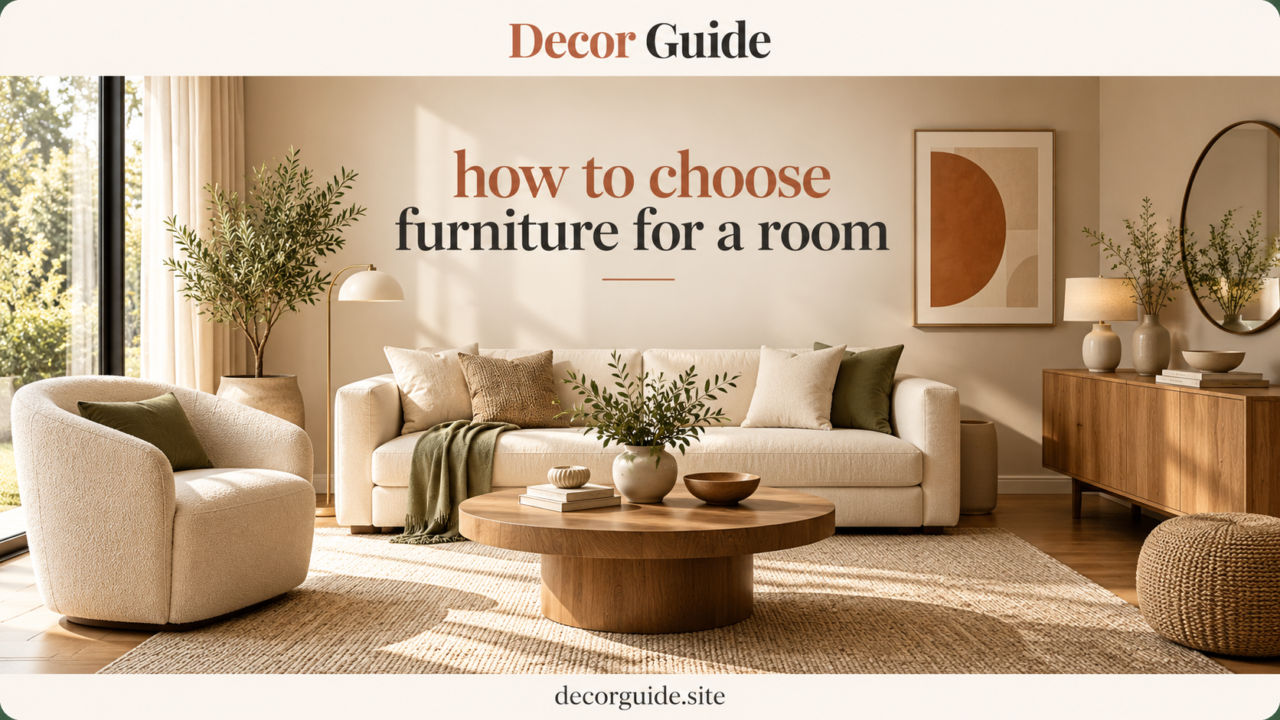
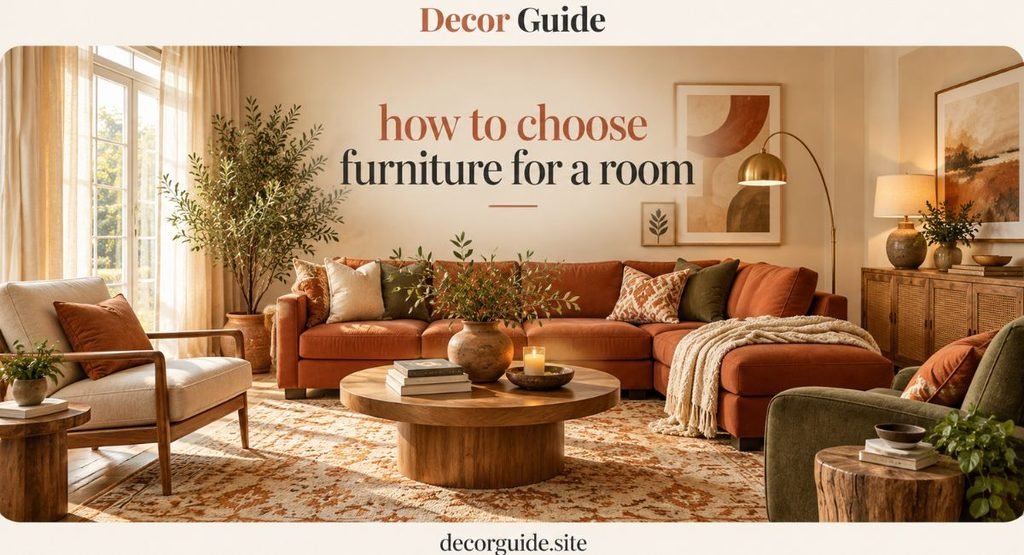
how to choose furniture for a room, start with the room’s purpose, measure the available space, and decide what furniture you actually need. Then consider the furniture’s size, layout, storage needs, style, material, and budget. The goal is not to fill every empty area. It is to create a room where furniture fits comfortably, supports daily activities, and works with the pieces you already own. Measuring before shopping and planning the layout first can prevent many common furniture buying mistakes.
1. Start With the Purpose of the Room
Before looking at furniture, decide what you need the room to do.
A living room might need comfortable seating, a place for the television, storage, and a surface for everyday items. A bedroom may need a bed, clothing storage, bedside tables, and possibly a desk. A dining room may need a table, chairs, and storage for dining items.
The purpose should guide your furniture choices.
For example, if a living room is mainly used for relaxing and watching television, comfortable seating and a suitable TV position may matter more than adding several decorative pieces.
If the room also needs to function as a workspace, you may need to reserve part of the floor area for a desk and chair.
Ask yourself:
- What activities happen in this room?
- Who uses the room?
- How many people normally use it?
- What furniture do I already have?
- What items need to be stored?
- Do I need the room to serve more than one purpose?
Write down the essential furniture before you start shopping. This simple step helps prevent buying pieces that look attractive but do not solve a real need.
2. Measure the Room Before Buying Anything
One of the most important steps in choosing furniture is measuring the space.
Measure the length and width of the room and note the position of doors, windows, radiators, built in storage, outlets, and other features that affect furniture placement.
Do not measure only the empty floor area. You also need to think about how furniture will enter the room.
Check:
- Doorway width
- Hallway space
- Stairways
- Elevator dimensions if applicable
- Door swing
- Window positions
- Existing built in furniture
- Areas that need to remain accessible
A sofa may fit on a floor plan but still be difficult to bring through a narrow doorway.
Make a Simple Floor Plan
You do not need complicated design software.
A simple drawing showing the room’s walls, doors, windows, and major features can be enough. Add the approximate dimensions of the furniture you are considering.
This gives you a better idea of how each piece will work before you spend money.
For larger furniture, think about the complete footprint rather than just its width.
A sofa, for example, needs space around it for people to move, sit, and access other parts of the room.
3. Decide What Furniture Is Essential
Once you know the room’s purpose and dimensions, separate furniture into three groups:
Essential: Furniture the room cannot function properly without.
Useful: Pieces that solve a specific need but are not absolutely necessary.
Optional: Decorative or occasional pieces that can be added later.
For a bedroom, a bed and clothing storage may be essential. A bedside table could be useful, while an extra accent chair might be optional.
This approach is particularly helpful when working with a limited budget.
Instead of buying everything at once, start with the pieces that affect how the room functions.
4. Choose Furniture That Fits the Room
Furniture should be proportional to the room.
A large piece can make a small room feel crowded, while several very small pieces can make a large room feel disconnected.
This does not mean every piece needs to be tiny in a small room. One appropriately sized main piece can often work better than several smaller pieces that create visual clutter.
Consider both the furniture’s physical dimensions and its visual weight.
For example, furniture with bulky arms, heavy bases, or solid fronts can appear larger than a similarly sized piece with slimmer lines.
Leave Enough Space to Move
Think about walking paths before deciding where furniture goes.
You should be able to move naturally between the room’s main areas without constantly walking around furniture.
Do not push every piece against a wall simply because the center of the room is empty. Sometimes bringing furniture slightly into the room creates a more useful conversation or activity area.
The correct arrangement depends on the room’s shape, furniture size, doors, windows, and how the room is used.
5. Plan the Layout Before Shopping
A furniture layout should come before the shopping list whenever possible.
Start by choosing the room’s main focal point.
It could be:
- A television
- Fireplace
- Large window
- Bed
- Artwork
- Architectural feature
Then position the most important furniture around that focal point.
After that, add secondary pieces.
For a living room, you might position the main seating first, then consider a coffee table, side tables, storage, and additional seating.
For a bedroom, start with the bed and then work out where clothing storage, bedside tables, and other furniture can fit.
The layout should support the way people actually use the room.
6. Think About Storage Before Buying Storage Furniture
Storage furniture should solve a specific storage problem.
Before buying a cabinet, bookshelf, console, dresser, or storage bench, identify what you need to put inside it.
Make a quick list.
For example:
- Books
- Toys
- Clothing
- Blankets
- Electronics
- Documents
- Decorative objects
- Everyday household items
Then decide whether those items need to be displayed, hidden, or accessed frequently.
Open vs. Closed Storage
Open storage makes items easy to see and reach. It can work well for books, baskets, plants, or carefully arranged decorative objects.
Closed storage hides everyday clutter and can create a cleaner visual appearance.
If a room contains many small items that do not need to remain visible, closed storage may be more practical.
You can also combine both.
A shelving unit with baskets or cabinets can provide visible display space while keeping smaller items contained.
7. Consider the Furniture Style
Style matters, but it should come after function and fit.
Start by identifying the overall look you want.
You might prefer:
- Modern
- Traditional
- Minimal
- Contemporary
- Rustic
- Scandinavian inspired
- Transitional
- Eclectic
You do not need every piece to come from the same furniture collection.
Instead, look for connections between pieces.
These connections can come from:
- Similar wood tones
- Repeated colors
- Related shapes
- Similar finishes
- Consistent hardware
- Complementary fabrics
For example, a room can combine different furniture styles successfully when the colors and proportions feel connected.
8. Match Furniture With What You Already Own
If you are replacing only some furniture, start with the pieces that are staying.
A new sofa, dining table, bed, or cabinet should not be chosen in isolation.
Look at:
- Existing flooring
- Wall color
- Curtains
- Rugs
- Lighting
- Artwork
- Existing furniture
- Wood tones
- Metal finishes
You do not have to match everything exactly.
In fact, exact matching can sometimes make a room feel too uniform.
The goal is to make new furniture feel intentional alongside the pieces you already have.
9. Choose Materials Based on Everyday Use
Furniture materials should match how the room is used.
A busy family room may need surfaces and upholstery that are practical for regular use. A formal room that receives less daily traffic may allow more delicate finishes.
Consider:
- How frequently the furniture will be used
- Who will use it
- Whether children use the room
- Whether pets use the room
- How easy the material is to clean
- How much maintenance you are willing to do
Do not choose a material only because it looks good in a photograph.
Think about how it will work in your actual home.
10. Choose Furniture for Comfort, Not Just Appearance
Furniture can look perfect and still be uncomfortable.
When possible, test seating before buying it.
Pay attention to:
- Seat comfort
- Back support
- Seat height
- Arm position
- Cushion firmness
- Ease of getting up and sitting down
For tables and desks, consider whether their height works comfortably with the chairs being used.
For beds, consider the room around the bed as well as the bed itself.
Furniture should support the activities that happen in the room rather than simply filling space.
11. Create a Furniture Budget
You do not need to furnish an entire room at once.
Divide your budget according to priority.
Free or Very Low Cost Approach
Before buying anything, work with what you already own.
Try:
- Rearranging furniture
- Removing unnecessary pieces
- Moving storage to a more useful location
- Changing the position of a rug
- Repurposing an existing table
- Using baskets or containers you already have
Sometimes the biggest improvement comes from changing the layout rather than purchasing furniture.
Moderate Budget
If you need new furniture, prioritize the pieces that have the biggest effect on how the room functions.
For example, in a living room, you might prioritize seating and practical storage before adding decorative side furniture.
Higher Budget
With a larger budget, you can focus on long term choices such as durable furniture, custom storage, or pieces designed specifically for the room.
Even with more money available, the same rule applies: measure first and buy according to need.
12. Use a Different Approach in Small Rooms
Small rooms require more attention to scale and flexibility.
Choose furniture that performs more than one job when possible.
Examples include:
- A storage bench
- An ottoman with storage
- A desk that can double as a console
- A bed with useful storage underneath
- Nesting tables
- Furniture that can be moved easily
Avoid adding furniture simply because there is an empty corner.
Every piece should have a purpose.
Keep the Floor Area Useful
In a small room, too many furniture pieces can interrupt movement.
Instead of filling every wall, think about creating a clear path through the room.
Furniture with visible legs can also create a different visual effect from very solid, floor to floor pieces. The right choice depends on your style and storage requirements.
13. Consider Furniture Height
Furniture height can change how spacious or enclosed a room feels.
If a room has low ceilings, very tall or visually heavy furniture can make the space feel more enclosed.
In rooms with high ceilings, taller storage or larger vertical elements may help the furniture feel more proportional.
Think about the furniture as a group rather than judging each piece separately.
A low sofa next to an unusually tall cabinet may create an awkward visual relationship, even if both pieces look good individually.
14. Check Color Before You Buy
Color should work with the room’s existing palette.
Start with the colors that are already difficult or expensive to change, such as flooring, major upholstery, or built-in features.
Then choose furniture that works with those elements.
If you prefer flexibility, neutral furniture can provide a useful base while color can be added through smaller, easier to change items such as cushions, throws, artwork, or accessories.
However, neutral does not mean everything must be beige, gray, or white.
A room can use color while still maintaining a balanced overall palette.
15. Avoid These Common Furniture Mistakes
Buying Before Measuring
This is one of the easiest mistakes to avoid.
Measure the room, entry route, and furniture space before purchasing.
Choosing Furniture Only From Photos
A product can look attractive online while being unsuitable for your room.
Check dimensions, materials, and the way the piece will function in your space.
Filling Every Empty Area
Empty space is not automatically a problem.
Rooms need breathing room and clear movement paths.
Buying Too Many Matching Pieces
A complete matching set may seem convenient, but different pieces can sometimes create a more personal and flexible room.
Ignoring Storage Needs
If everyday items have nowhere to go, even attractive furniture will not solve the room’s organization problem.
Choosing Style Before Function
A beautiful chair that nobody uses is not a useful furniture choice.
Start with how the room needs to work.
Forgetting the Entry Route
Always consider how the furniture will get into the room.
A piece that fits the final location may not fit through the entrance.
16. A Simple Furniture Selection Checklist
Before buying a piece, ask these questions:
- What purpose does this furniture serve?
- Do I actually need it?
- Have I measured the available space?
- Does it fit the planned layout?
- Can I move around it comfortably?
- Does it work with my existing furniture?
- Is the material suitable for everyday use?
- Does it provide needed storage?
- Can I afford it without sacrificing more important pieces?
- Can the furniture enter the room easily?
If you cannot answer these questions, pause before purchasing.
17. Build the Room in the Right Order
If you are furnishing an empty room, do not feel pressured to buy everything at once.
Start with the largest or most important furniture.
For a living room, this may mean seating first.
For a bedroom, start with the bed.
For a dining room, begin with the dining table and chairs.
Once those pieces are in place, reassess the remaining space.
You may discover that you need less furniture than you originally expected.
Then add storage, secondary furniture, lighting, and decorative pieces based on what is still missing.
This approach makes it easier to control both the layout and the budget.
Frequently Asked Questions
How do I know what size furniture to buy for a room?
Measure the available area first and consider the furniture’s full footprint, including how people will move around it. Compare those measurements with the room layout before purchasing.
Should all furniture in a room match?
No. Furniture can have different designs while still feeling connected through color, material, shape, or finish. The goal is visual balance rather than identical pieces.
What furniture should I buy first?
Start with the furniture that is essential to the room’s main purpose and has the biggest effect on the layout. This is usually one of the largest pieces, such as a bed, sofa, or dining table.
How can I choose furniture for a very small room?
Focus on essential pieces, maintain clear walking paths, and consider furniture that provides more than one function. Avoid adding pieces simply to fill empty areas.
Is it better to buy furniture as a matching set?
A matching set can make selection easier, but it is not required. Combining compatible pieces can give you more flexibility and allow you to replace individual items later.
How can I make furniture work with an existing room?
Start with the furniture and features that are staying. Consider their colors, materials, proportions, and style, then choose new pieces that complement rather than compete with them.
Final Thoughts
Choosing furniture for a room is easier when you treat it as a planning task rather than a shopping task. Start with the room’s purpose, measure the space, identify essential furniture, and plan the layout. Then consider storage, comfort, materials, style, color, and budget.
The best furniture choice is not necessarily the largest, trendiest, or most expensive piece. It is the piece that fits the room, supports the way you live, and works with the space you already have.