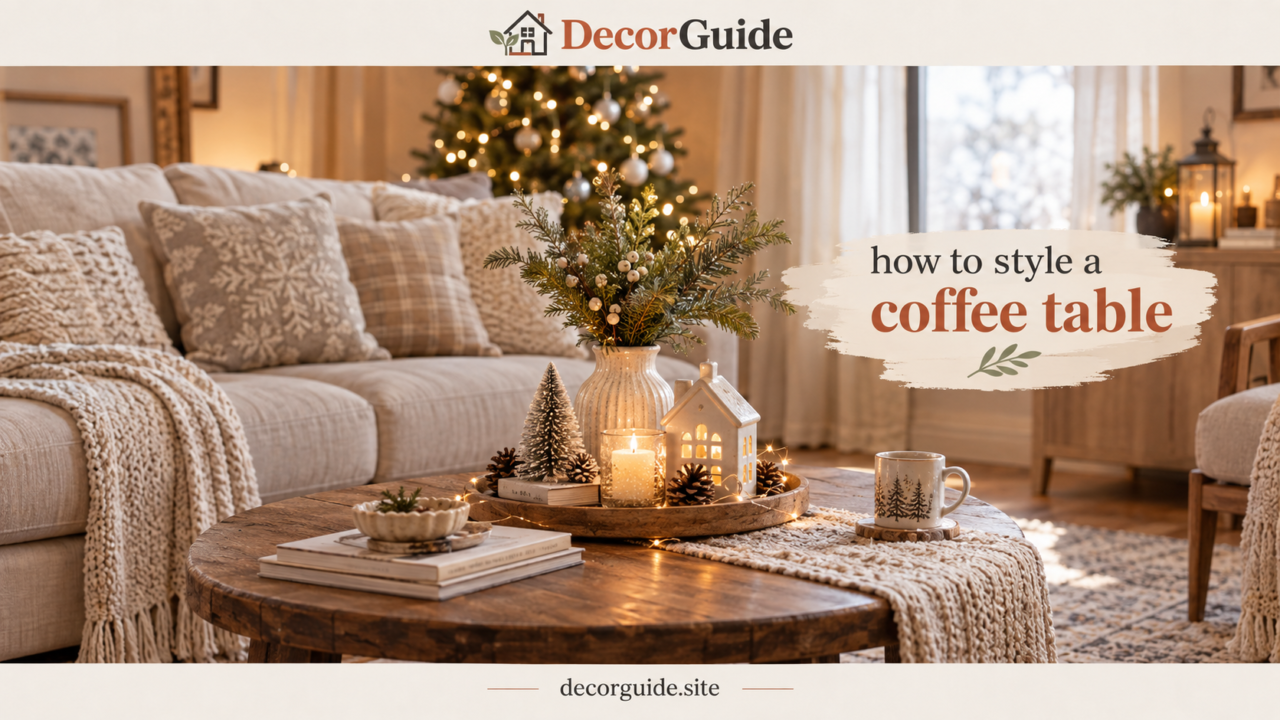
To style a coffee table, start with a clear surface and build the arrangement around three things height, shape, and function. Use a tray or decorative base to organize smaller items, add one taller element such as a vase or plant, then balance it with books, a candle, or another low piece. Leave enough open space for everyday use. The goal is not to fill every part of the table. A good arrangement should look intentional while still giving you room to place a cup, remote, or book.
Start by Understanding Your Coffee Table
Before you start thinking about how to style a coffee table, look at the table itself. Its size, shape, material, and position in the room should influence how you style it. A large rectangular coffee table can handle several visual groupings, while a small round table usually looks better with one simple arrangement.
If your coffee table is mainly decorative, you can use more fragile or decorative pieces. If your family regularly eats, drinks, reads, or works around it, the styling needs to be more practical.
Ask yourself:
- Is the table used every day?
- Do you need space for drinks?
- Is the table in a high traffic area?
- Does the room already have lots of decoration?
- Is the table small or oversized compared with the sofa?
- Do you need hidden storage nearby?
These answers will help you decide how much decoration is appropriate.
Clear the Table Before Styling
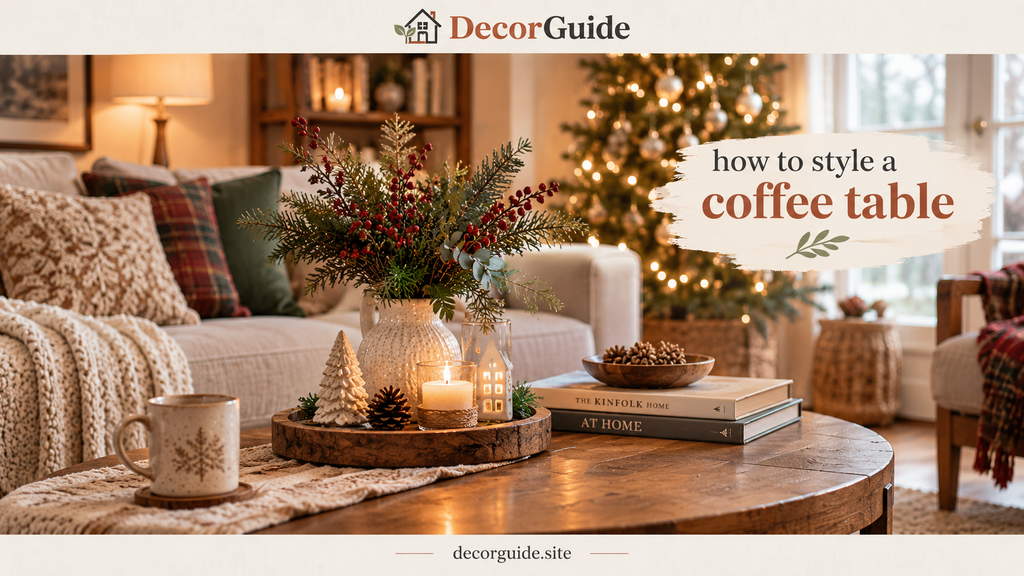
The easiest way to improve a coffee table arrangement is to start with an empty surface.
Remove everything and clean the table. Then look at the room from the sofa and from the main entrance.
This gives you a better idea of what the table needs.
You may discover that the room already has enough visual interest from:
- Artwork
- Curtains
- Rugs
- Throw pillows
- Shelving
- Lighting
- Plants
- Decorative furniture
If the rest of the room is busy, keep the coffee table simple.
If the room feels plain, the table can provide another layer of texture and personality.
Starting with an empty table also prevents a common problem: keeping random objects simply because they were already there.
Step 1: Choose a Functional Base
A tray is one of the easiest ways to create structure.
Place a tray on the table and use it to group smaller objects. Instead of having a candle, remote, coaster, and small decorative object scattered across the surface, they can become one organized zone.
A tray can also make it easier to clear the table when you need more space.
Choose the shape according to your table:
- Rectangular tray for a rectangular table
- Round tray for a round table
- Low tray for a table that already has a strong visual shape
- Wooden or woven tray for a warmer look
- Simple neutral tray for a minimalist room
You do not have to use a tray. If your table is very small, adding one may actually make the surface feel crowded.
Step 2: Add One Taller Element
Once you have your base, add something with height.
This could be:
- A vase
- A small plant
- A decorative branch
- A sculptural object
- A simple candleholder
Height gives the arrangement a focal point and prevents everything from sitting at the same level.
However, avoid choosing something so tall that it blocks conversation across the table.
For everyday living rooms, low and medium height pieces are often easier to live with than large decorative objects.
If you have children or pets, stability matters too. Choose pieces that are difficult to knock over and avoid fragile objects when they are likely to become a problem.
Step 3: Add Coffee Table Books
Coffee table books can add both decoration and function.
Choose books that fit the room and that you would actually enjoy looking through. Interior design, photography, travel, art, architecture, food, or other visual subjects can work well.
Stacking two or three books can create a low platform for another decorative object.
The important thing is to avoid making the books look like they were placed there only to fill space.
A simple arrangement might include:
Book stack + small object + vase
Or:
Book stack + candle + tray
If your table is small, one book may be enough.
Step 4: Mix Different Heights
A coffee table usually looks more interesting when the objects do not all have the same height.
For example, you might have:
- A taller vase
- A medium size book stack
- A low tray
- A small decorative bowl
This creates visual movement.
At the same time, too many different heights can make the table look messy. You only need a few levels.
A useful approach is to think in terms of tall, medium, and low rather than trying to make every object different.
Step 5: Add Different Shapes
Shape is another easy way to make a coffee table arrangement feel balanced.
If everything is rectangular, the arrangement may feel rigid. If everything is round, it can lack structure.
Try combining different forms.
For example:
- Rectangular books
- Round tray
- Rounded vase
- Small sculptural object
The shapes do not need to match. They simply need to work together.
The shape of the table should also influence your choices. A round coffee table can look especially good with curved or organic objects, while a rectangular table gives you more room to create separate groupings.
Step 6: Bring in Texture
Texture helps a coffee table feel less flat.
Instead of using several objects made from the same material, combine a few different surfaces.
You could use:
- Wood
- Glass
- Ceramic
- Metal
- Woven materials
- Stone
- Natural greenery
For a warm living room, wood, woven materials, and ceramic can create a relaxed combination.
For a modern room, glass, metal, smooth ceramics, and simple books may feel cleaner.
You do not need many materials. Two or three different textures are usually enough to create contrast.
Step 7: Add Something Organic
Natural elements can soften a coffee table arrangement.
A small plant, flowers, branches, or another natural element can add life to an otherwise hard surface.
For low maintenance styling, choose an element that suits your lifestyle. If you do not want to care for a plant, dried branches or artificial greenery can provide a similar visual effect without regular watering.
The important thing is scale.
A very large arrangement can dominate the table, while a tiny plant may disappear among other objects.
Step 8: Create a Small Decorative Group
Instead of spreading individual objects across the entire table, group related items.
For example, a tray might contain:
- A candle
- A small bowl
- A decorative object
Meanwhile, a book stack could sit outside the tray with a small vase on top.
This creates separate visual zones.
Grouping also makes the table easier to clean. You can move a group together instead of picking up every item individually.
Step 9: Leave Empty Space
One of the most important steps in coffee table styling is knowing when to stop.
Empty space is part of the design.
You should be able to see portions of the table surface. More importantly, you should have somewhere to put everyday items.
If every inch is covered, the table may look decorated in a photograph but become frustrating in daily life.
After placing your main pieces, step back.
If something feels unnecessary, remove it.
A simpler arrangement is often easier to maintain.
Coffee Table Styling by Table Shape
How to Style a Rectangular Coffee Table
Rectangular tables offer plenty of styling possibilities.
You can create one central arrangement or divide the surface into two or three smaller zones.
For example:
Tray + vase on one side
Books + small object on the other
This can work especially well when the table is long enough to maintain open space between the groups.
Avoid placing identical objects symmetrically unless you specifically want a formal look.
How to Style a Round Coffee Table
Round tables naturally encourage a central arrangement.
A round tray, small plant, vase, or stack of books can work well.
Avoid filling the entire circular surface with many small objects. The table can quickly look busy.
One larger focal point surrounded by a few smaller pieces is often easier to manage.
How to Style a Square Coffee Table
A square table gives you a balance between the flexibility of a rectangle and the central focus of a round table.
You can use a tray in the center or create two small groupings.
Keep the middle area organized rather than spreading tiny objects into every corner.
Coffee Table Styling for Small Living Rooms
Small living rooms need a slightly different approach.
The coffee table already occupies valuable floor space, so the styling should not make the room feel heavier.
Choose fewer objects and prioritize pieces that serve a purpose.
For example:
- A small tray
- One book
- A compact vase
- A small plant
You can also use a coffee table with storage if the room needs a place for everyday items.
Open vs. Closed Storage
Open storage makes items easy to reach, but it also keeps them visible.
Closed storage hides clutter and can make a small room feel more organized.
If your main problem is quick access to blankets, books, or remotes, open shelving may be useful.
If your main problem is visual clutter, drawers or closed compartments may be more practical.
The right choice depends on what you need to store, not simply on appearance.
Coffee Table Styling on a Budget
You do not need to buy an entirely new set of decorations.
Start with things you already have.
Free Options
Look around your home for:
- Existing books
- A small plant
- A ceramic bowl
- A candle
- A decorative object
- A vase from another room
- A small serving tray
Move items between rooms and test different combinations.
Sometimes changing the arrangement is enough.
Low Cost Options
If you need a few new pieces, focus on one category at a time.
A simple tray can provide structure. A secondhand vase or decorative bowl can add shape. A plant can add color and texture.
Avoid buying several small decorative items just because they are inexpensive. A collection of unrelated objects can create more clutter than style.
Higher Cost Options
If you are investing more, consider the table itself and the storage it provides.
A well designed coffee table with drawers, shelves, or a lift top can solve practical problems while also improving the room.
Think about your storage needs first.
If you regularly have books, blankets, remotes, or other items around the sofa, furniture that provides useful storage may be more valuable than buying additional decor.
Match the Styling to Your Room
Your coffee table should feel connected to the rest of the living room.
Minimalist
Use a small number of objects with simple shapes.
Try:
- One tray
- One book stack
- One vase or sculptural object
Keep colors restrained and leave plenty of open surface.
Cozy
Layer books, warm textures, candles, baskets, and natural materials.
The arrangement can feel relaxed rather than perfectly symmetrical.
Modern
Choose clean shapes and a limited number of materials.
Glass, metal, ceramic, and carefully selected books can create a polished appearance without excessive decoration.
Traditional
Books, decorative bowls, flowers, classic accessories, and wood tones can work well.
The arrangement can be slightly more layered while still maintaining clear organization.
Common Coffee Table Styling Mistakes
Filling Every Empty Space
An empty section of the table is not a problem that needs to be fixed.
Leave room for daily use.
Using Too Many Small Objects
Small objects can quickly become visual clutter.
Instead of five tiny accessories, try combining two or three more substantial pieces.
Making Everything the Same Height
When every item sits at the same level, the arrangement can look flat.
Add one taller element and keep other pieces lower.
Ignoring Function
A coffee table is furniture, not just a display platform.
If people use it every day, leave room for drinks, books, remotes, or other everyday objects.
Choosing Decor Without Considering the Room
A beautiful object can still look wrong if it does not relate to the surrounding furniture.
Look at the colors, materials, shapes, and overall style already present in the room.
Making the Arrangement Too Fragile
If the table is in a busy household, delicate pieces may not be practical.
Choose stable objects and place breakable items where they are less likely to be knocked over.
An Easy Formula You Can Reuse
If you want a simple starting point, use this formula:
1 functional base + 1 tall element + 1 book stack + 1 small object + open space
For example:
- A tray
- A medium vase
- Two books
- A small bowl
- Clear space around the arrangement
You can remove pieces if the table is small.
For a larger table, you can create a second group rather than making the first group larger.
This formula is flexible enough to work with different decorating styles.
How to Know When Your Coffee Table Is Finished
Sit on the sofa and look at the table from your normal viewing position.
Check three things:
Does it look balanced?
One side should not feel unnecessarily heavy.
Can you use the table?
There should be enough space for normal activities.
Does everything have a reason to be there?
If an object adds neither function nor visual interest, consider removing it.
Then look at the table from other parts of the room.
A coffee table is usually visible from several angles, so the arrangement should not only work from one viewpoint.
Final Thoughts
Learning how to style a coffee table is mostly about creating balance between decoration and everyday function. Start with the size and shape of your table, add a functional base when useful, introduce different heights and textures, and finish with a few carefully chosen objects.
The most important step is leaving enough open space. A coffee table should look finished without looking overloaded.
If you are working with a small living room, prioritize useful pieces and consider storage before adding more decoration. If you have a larger table, use separate visual groups rather than filling the entire surface.
The best arrangement is one that looks intentional, fits your room, and still works for everyday life.
FAQs
Should a coffee table match the TV stand?
It does not have to match exactly. It is usually better to coordinate materials, colors, or shapes so the furniture feels connected without looking like a matching set.
Should coffee table decor be symmetrical?
No. Symmetrical styling can create a formal appearance, but an asymmetrical arrangement can feel more relaxed and natural. Balance matters more than perfect symmetry.
Can I style a coffee table without books?
Yes. Books are useful for adding height and visual weight, but they are not essential. A tray, plant, vase, bowl, or sculptural object can create an attractive arrangement without books.
Where should a coffee table sit in relation to the sofa?
The table should be positioned so people can comfortably move around it and reach the surface from the sofa. The exact placement depends on the room layout and furniture.
How can I make a coffee table look expensive?
Focus on composition rather than the price of individual objects. Combining different heights, textures, and shapes while keeping the arrangement uncluttered can create a more polished appearance.
How often should I change my coffee table decor?
There is no fixed schedule. Change it when your room needs a seasonal update, when the arrangement stops working for your daily routine, or when you simply want a different look.