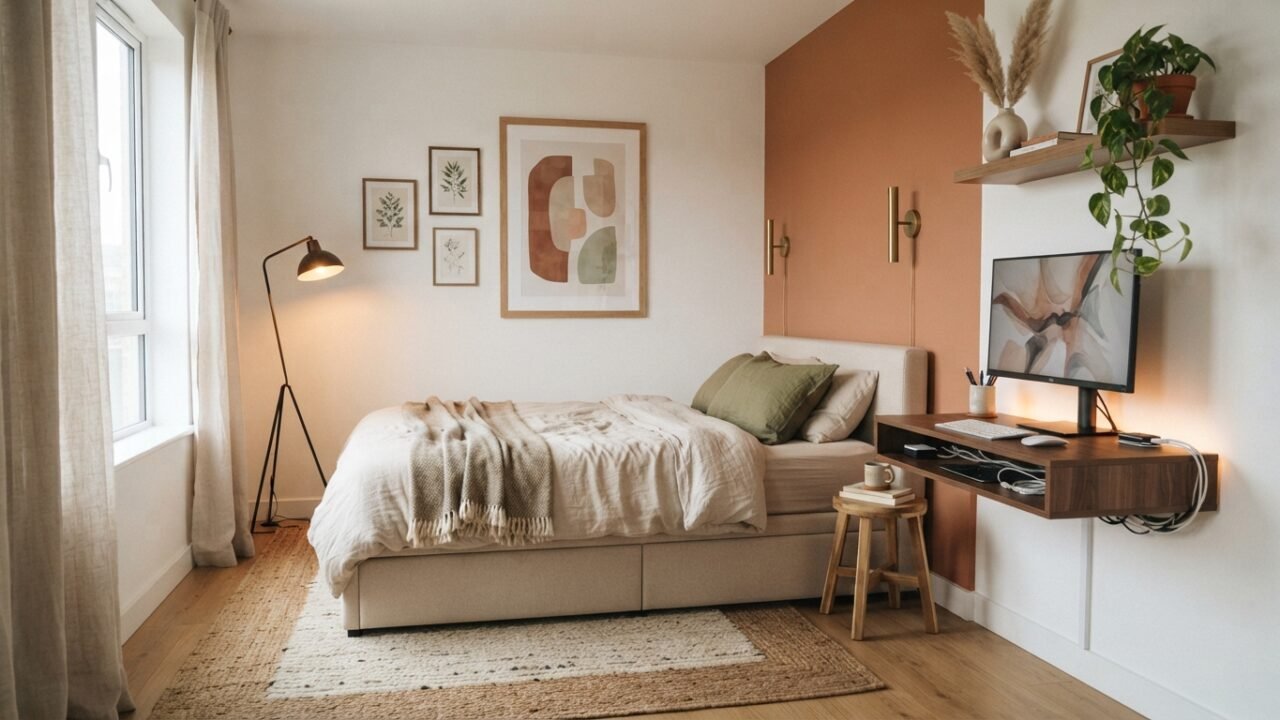
A cool room ideas is not the one with the most things on the walls. It’s a room with a clear point of view that still works for sleeping, studying, gaming, or having friends over. Rooms that get this right tend to share four traits: one organizing theme, light at more than one height, a layout built around what you actually do there, and a few personal focal points instead of decoration everywhere.
This article covers those in order, with options for renters, small rooms, shared rooms, and tight budgets. If you were searching for ways to keep a room physically cooler, there’s a short section on that near the end.
What makes a room feel cool rather than just decorated
Most rooms that feel flat have the same problem: things were added one at a time with no shared idea. A poster here, a lamp there, a rug bought because it was on sale. Each item is fine, but nothing connects them.
Try describing the room you want in one sentence before buying anything. “Warm, dim, and a bit retro.” “Clean and bright with a lot of plants.” “Dark and moody with band posters.” That sentence becomes your filter. If a purchase doesn’t fit it, skip it.
Then choose two or three anchors, the things a person notices first. It might be a large piece of art, an unusual light, a statement bed, or a wall of shelves with a collection. Everything else should support those anchors and stay quieter. Restraint is what separates a room that looks curated from one that looks crowded.
Personal items do more work than trendy ones. A shelf of records, a framed map of a place you’ve been, or a collection of vintage cameras gives a room character that a mass produced print can’t.
Start with what the room needs to do
A room that looks great but doesn’t function will drift back to clutter within weeks. Before choosing decor, list what actually happens in the room: sleeping, homework, gaming, streaming, reading, hosting a friend, storing sports gear, doing hair or makeup.
Then assign each activity a zone, even in a small room:
- Sleep zone: bed, a light within reach, a spot for a phone charger.
- Work or play zone: desk or gaming setup, ideally near an outlet and away from window glare.
- Lounge zone: a beanbag, chair, or daybed, if space allows.
- Storage zone: wardrobe, dresser, shelves, or bins for everything else.
Put things used daily within easy reach, and things used rarely higher up, lower down, or in another room. Before you decorate, sort what’s in the room. Anything broken, outgrown, or unused shouldn’t take up space that could hold the items that make the room feel like yours. Decor added over clutter just looks like more clutter.
Lighting that sets the mood
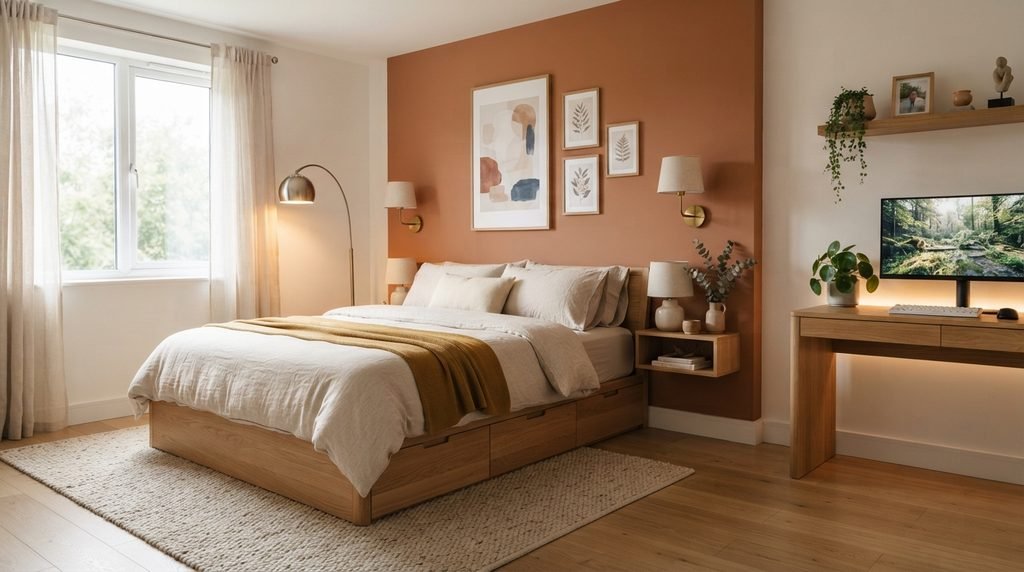
One bright overhead light makes almost any room feel like a waiting area. The single biggest upgrade is using several light sources at different heights so you can change the mood.
Build the lighting in layers:
- Overhead: keep it, but put it on a dimmer or use a warm bulb.
- Lamps: a table or floor lamp adds a pool of light at a lower height, which feels cozier.
- Accent lighting: LED strips behind a desk, under a shelf, or behind a headboard give a glow without taking up floor space. Neon style LED signs, a projector lamp, or string lights along the ceiling line add personality.
- Task lighting: a desk lamp for homework or drawing, so the mood lighting can stay dim.
Pick one main color temperature and stay with it. Warm white (around 2700K to 3000K) feels relaxed; cooler white feels sharper and suits desks. Color changing LEDs are fun as an accent, but using red, blue, and green everywhere at once tends to look chaotic. Choose one or two colors that match your theme.
A few safety points matter here. Buy lighting that carries a recognized safety certification mark for your region, such as UL or ETL in the United States. Don’t bundle or cover LED strips with fabric, and don’t run cheap adapters at their limit. Don’t overload one outlet with several power strips. Follow the manufacturer’s instructions for how long a product can run, and consider a timer or smart plug so accent lights turn off automatically at night, which also means one switch controls the whole mood.
If you game or watch a lot of screen time, a soft light behind the monitor reduces the contrast between a bright screen and a dark wall, which many people find easier on the eyes.
Wall ideas that don’t need a renovation
Walls are where a room’s personality shows most, and where renters feel most restricted. You have more options than paint.
Gallery wall. Lay the frames out on the floor first, or cut paper templates and tape them to the wall, so you can adjust the arrangement before making holes. Keep something consistent, like frame color or a limited palette, so a mix of photos, prints, and objects looks deliberate.
One large piece. A single oversized print, tapestry, or painting makes a stronger anchor than many small items, and it’s less to hang and dust.
Peel and stick wallpaper or decals. Popular in rentals for an accent wall. Test a small hidden patch first, since removal depends on the wall paint and the product. Check your lease before anything permanent.
Fabric. Tapestries, wall hangings, or fabric panels add texture and soften sound in echoey rooms.
Painted features. An arch behind the bed, a two tone wall, or a painted stripe adds a lot for the cost of one sample pot. Get permission first in a rental.
Shelves. Floating shelves double as display and storage. Anchor them into studs or use anchors rated for the load, and check the shelf’s stated weight limit.
For hanging without drilling, adhesive hooks and strips work for lightweight items, but follow the weight rating printed on the packaging exactly. Heavier mirrors and frames should be screwed in properly.
Layout and furniture ideas
Small rooms
Small rooms feel cooler when the floor is visible. Choose furniture that does two jobs: a storage bed with drawers, a fold down or wall mounted desk, floating shelves as nightstands, or a daybed that works as both bed and sofa.
A loft bed frees up the entire floor underneath for a desk, a beanbag corner, or a wardrobe, but it only suits rooms with enough ceiling height, so measure carefully and follow the manufacturer’s guidance on clearance, guardrails, and age recommendations. Keep the bed away from ceiling fans and light fixtures.
A large rug defines the main zone and makes a small room feel intentional. Mirrors across from a window or lamp add depth, though they shouldn’t sit where they reflect a messy corner.
Gaming, study, and creative rooms
Set the desk so you’re not looking straight into a window, which causes glare, and so the monitor sits roughly at eye level. A good chair matters more than most accessories. If the desk shares a room with your bed, use a bookcase, rug, or curtain to make the two zones feel separate. It helps your brain treat the bed as a place for sleep.
Sound matters too. Rugs, curtains, and wall fabric reduce echo, and foam or fabric acoustic panels can help if you stream or record, though they aren’t a substitute for real soundproofing.
For hobbies, put the gear you use most in the most accessible spot. A pegboard over the desk holds headphones, controllers, tools, or craft supplies, and looks purposeful rather than messy.
Shared rooms
Give each person one clearly defined zone: their own bed, a lamp, a shelf or wall section for personal items. Shared rooms feel calmer when the common area, usually the middle of the floor, stays open. Curtains on a ceiling track, a bookshelf divider, or bunk beds with separate storage underneath give each person some privacy. Let each person choose their own accents while agreeing on shared basics like wall color and bedding tones.
Style directions compared
You don’t need to commit to a label, but knowing the trade offs helps you choose.
| Style | What defines it | Watch out for |
|---|---|---|
| Industrial / loft | Dark metal, wood, exposed textures, Edison style bulbs | Can feel cold; add textiles and warm light |
| Minimal / Japandi | Light wood, neutral palette, few objects | Needs disciplined storage or it shows every stray item |
| Retro / vintage | Thrifted furniture, warm colors, posters, records | Easy to overcrowd; keep one era or mood |
| Dark and moody | Deep walls, low light, rich fabrics | Needs strong layered lighting or it feels small |
| Maximalist collector | Lots of art, objects, and color | Works only with clear zones and closed storage for the rest |
Two guidelines apply across all of them. Dark colors work best on one wall or in rooms with good artificial lighting, and light colors reflect more light in small or dim rooms. And open displays look better with fewer things on them: put the items you love on view and everything else behind doors or in boxes.
Storage and cable control
Storage is what keeps a cool room looking cool after the first week. Use the rule of display versus storage: put on display only what you’d want people to notice, and keep everything else in closed storage.
- Under the bed: drawers or low bins for off season clothes, extra bedding, or gear.
- Over the door: hooks for bags, jackets, and towels that would otherwise pile up on a chair.
- Cube shelving: works as a divider and holds bins for small items. Use matching bins so the shelf looks tidy.
- Wardrobe or rail: if the room has no closet, a freestanding unit or wall mounted rail helps. Anchor tall furniture to the wall to prevent tipping, which the U.S. Consumer Product Safety Commission recommends for dressers and other heavy pieces.
- Laundry basket: give it a fixed home, or it will end up on the floor.
Cables are the most common reason a tech heavy room looks messy. Mount a power strip under the desk, group cables with clips or sleeves, and label chargers so you can identify them at a glance. Keep power strips from being covered or overloaded.
A ten minute reset each week is more effective than an occasional deep clean. Return items to their zones, clear the desk, and put the bedding right.
Budget tiers: what to do at each spending level
No cost. Rearrange furniture so the bed and desk are in better positions. Clear surfaces, remove anything that doesn’t fit your theme, and group what remains in threes or a single tray. Move a lamp to a lower spot. Reuse frames or photos you already own.
Low cost. Add warm bulbs, a lamp or two, LED strips, a rug, a tapestry or poster set, peel and stick decor, and adhesive hooks. Thrift stores and secondhand marketplaces are good sources for frames, lamps, and small furniture.
Moderate. Buy the anchor piece, such as a storage bed, a good desk and chair, or a large piece of art. Add curtains, shelving, and a proper set of bedding.
Higher investment. Paint the room professionally, build custom shelving, replace flooring, or add dimmable wiring. These are worth it only if you plan to stay in the room for years.
Common mistakes
- Buying decor before deciding on a theme. It leads to a room of unrelated items.
- Relying on one overhead light. Even great decor looks flat under it.
- Too many small things. Twenty small items look like clutter; five larger ones look chosen.
- Ignoring cables. A beautiful setup with visible tangles reads as messy.
- Covering LED strips or overloading outlets. It’s a fire risk, and it’s easy to avoid.
- Blocking a window or door with furniture. Keep exits and egress routes clear.
- Mounting shelves or tall furniture without proper anchoring. Heavy items can fall.
- Making permanent changes in a rental without checking the lease.
If you meant a room that stays physically cool
Some people searching for cool room ideas want a room that’s comfortable in hot weather. The most effective steps focus on keeping heat out and moving air.
Close curtains or blinds on sun facing windows during the hottest part of the day. Light colored or reflective window coverings help more than dark ones. Open windows at night or early morning if the outside air is cooler, and try to create a cross breeze. The U.S. Department of Energy notes that a ceiling fan turning counterclockwise pushes air down in summer, and fans cool people, not rooms, so switch them off when you leave.
Reduce heat sources: turn off unused electronics, move a gaming PC away from the bed if possible, and choose LED bulbs, which produce less heat than incandescent ones. Cotton or linen bedding breathes better than heavy synthetics. If the room stays uncomfortably hot despite these steps, an air conditioner or a check of the home’s insulation and ventilation is worth considering.
Keeping the room fresh without buying more
Trends change faster than most people want to keep spending. Instead of replacing items, rotate them. Swap the art on your gallery wall every few months, change the bedding, move the lamp, or restyle a shelf around a new object. Keep a small box for items that aren’t on display so you can bring them back later.
Revisit the room when your use of it changes, whether that’s a new hobby, a new school year, or a roommate. A room that adapts stays useful, and a useful room is the one people actually enjoy being in.
FAQ
How do I make a boring room look cool without spending much?
Change the lighting first: warm bulbs, a lamp, and an LED strip make the biggest visible difference. Then remove clutter and hang one larger piece of art or a tapestry.
What colors work for a cool room?
It depends on the mood you want. Warm neutrals and soft greens feel relaxed, deep blues and charcoal feel moody, and one bright accent color keeps a neutral room from feeling flat. Limit the palette to two or three colors plus a neutral.
Are LED strip lights safe to leave on overnight?
Use certified products, follow the manufacturer’s instructions, and don’t cover or bundle the strips. Many people put them on a timer or smart plug so they switch off at night.
How do I pick a theme if I like several styles?
Choose one dominant style and let a second appear in small accents. For example, a minimal room with one vintage poster or a few industrial style lamps.
Can I make a cool room in a rental?
Yes. Use rugs, lamps, tapestries, adhesive hooks within their weight ratings, removable wallpaper after testing a small patch, and freestanding furniture. Check your lease for restrictions.
How do I hide cables on a desk in a rented room?
Use adhesive cable clips, sleeves, and a power strip mounted under the desk. A desk with the back facing a wall makes it easy to keep cables out of view.
What should I buy first?
Buy nothing until you’ve decided the room’s theme and zones. After that, lighting and a rug tend to change a room the most for the least money.